Last updated November 23, 2026
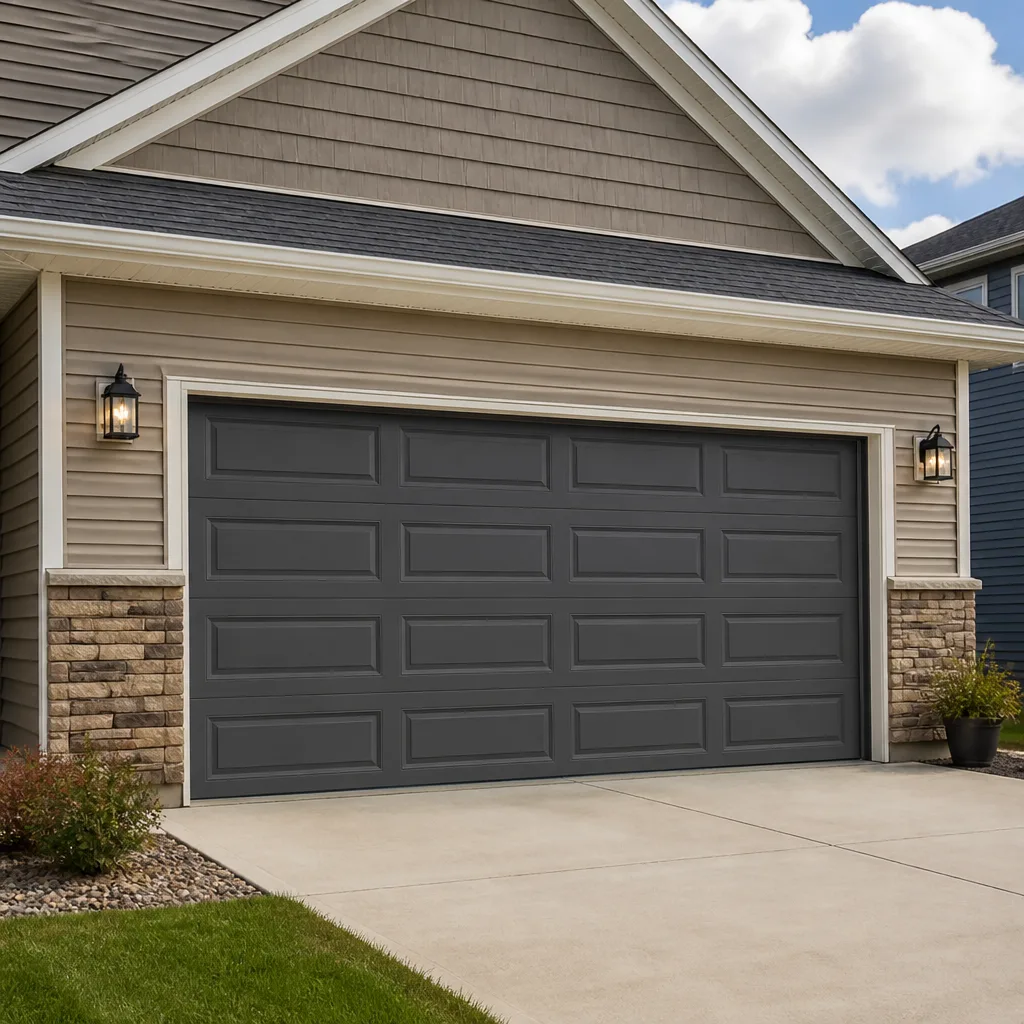 Raised-panel steel
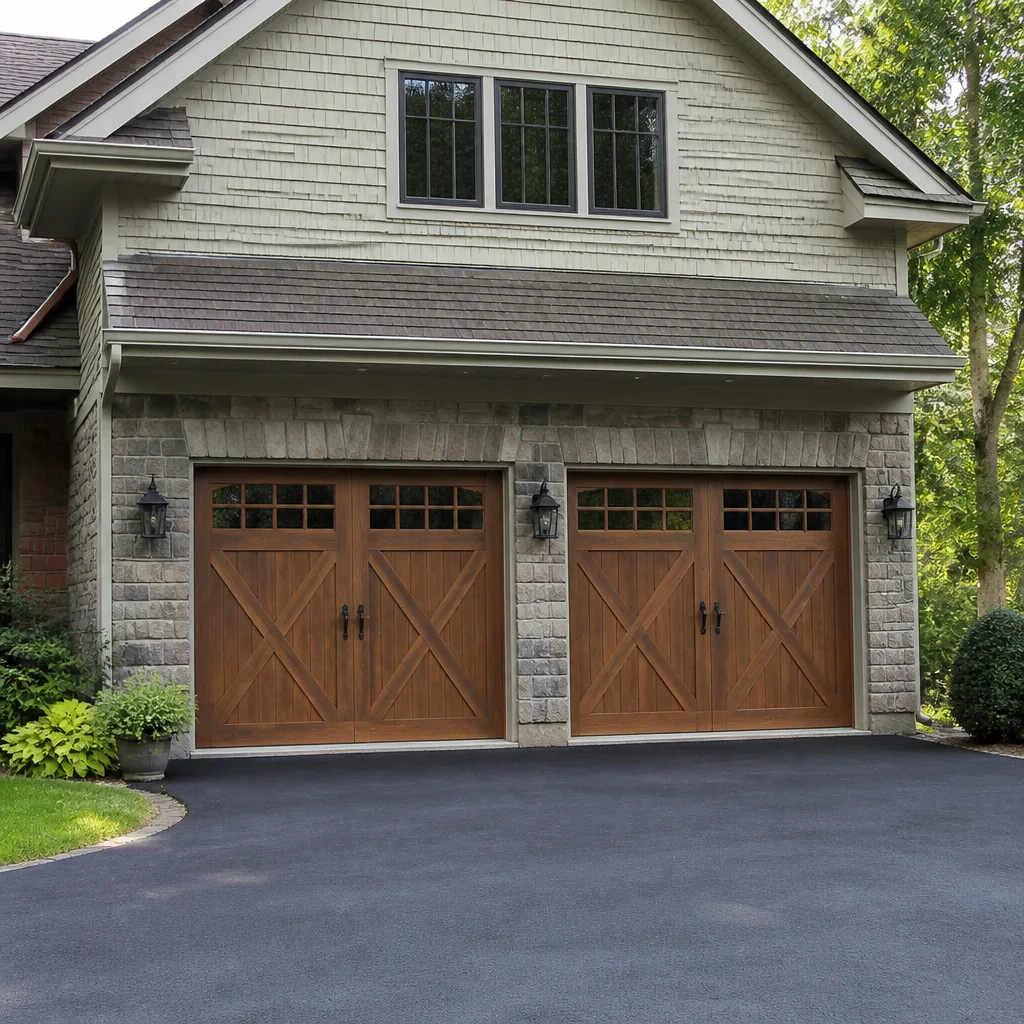 Carriage house
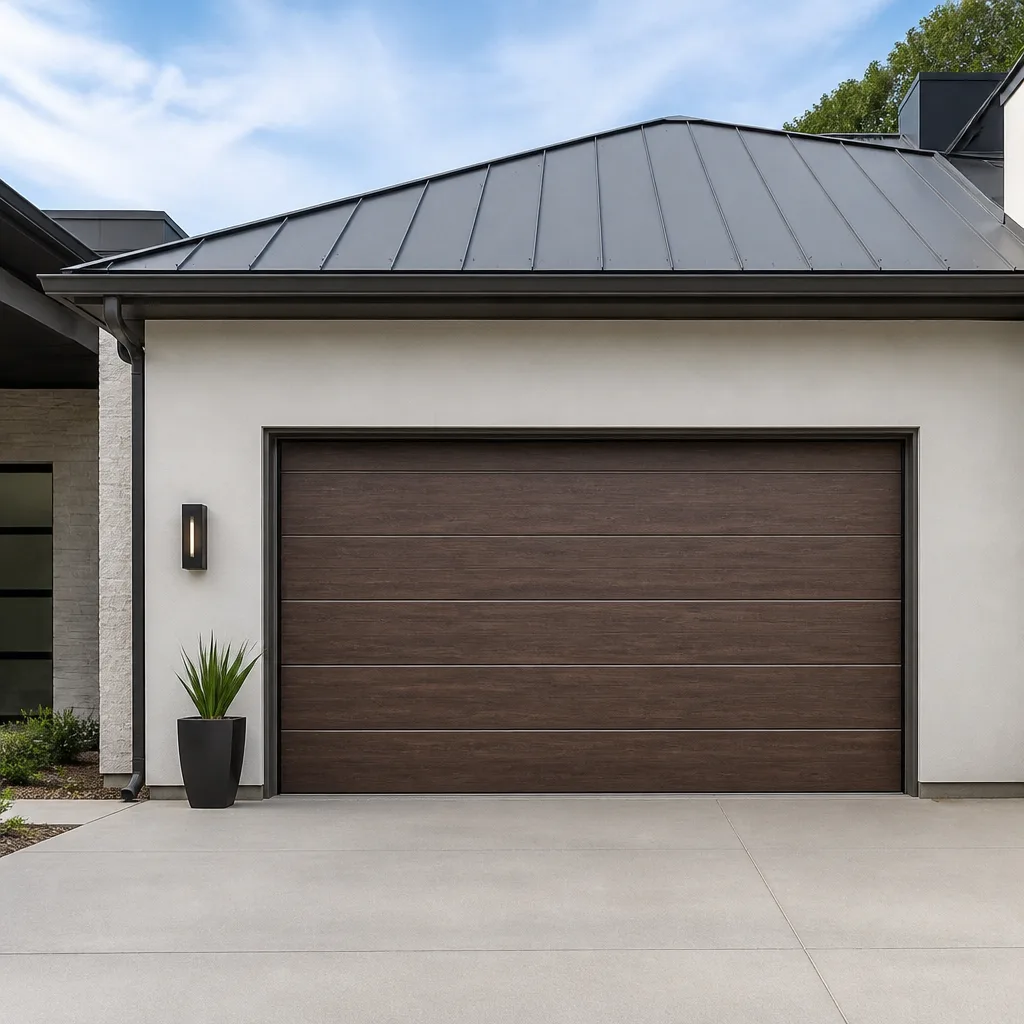 Modern flush
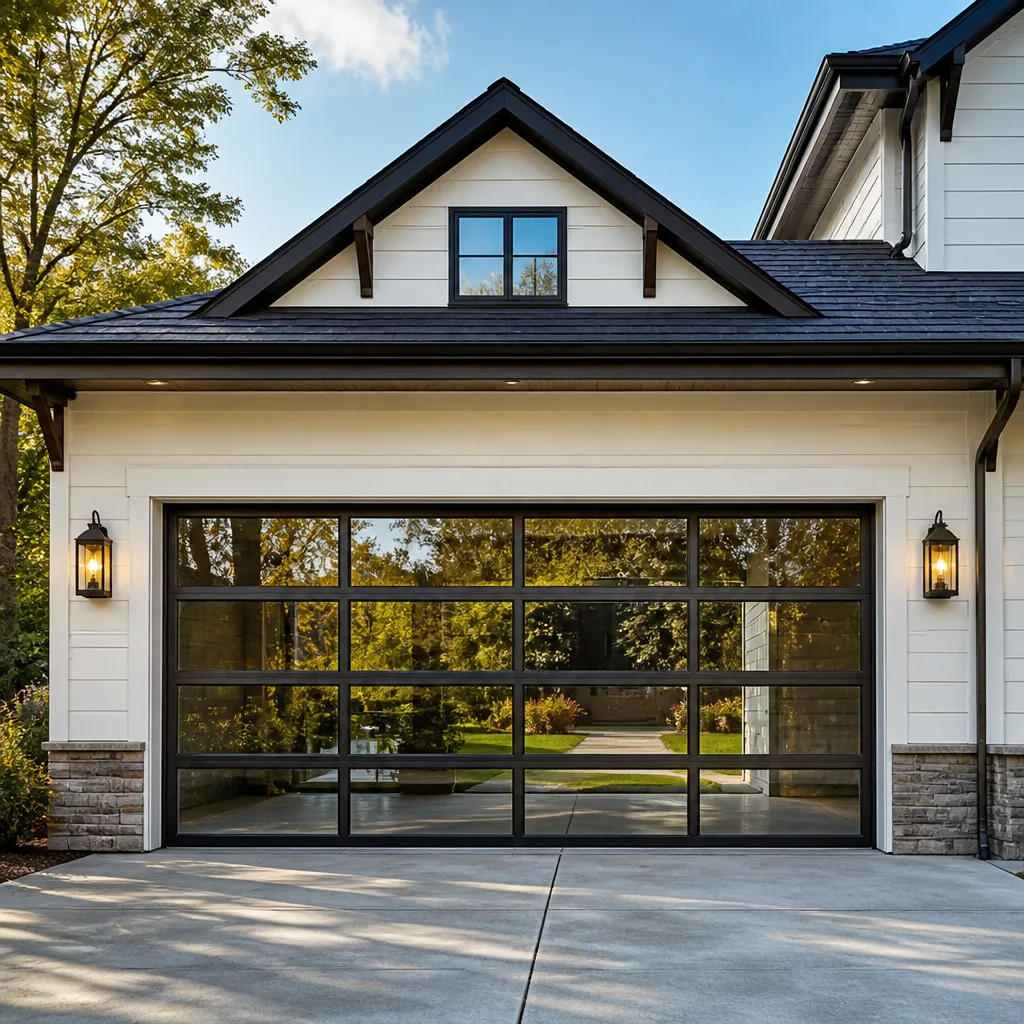 Full-view glass
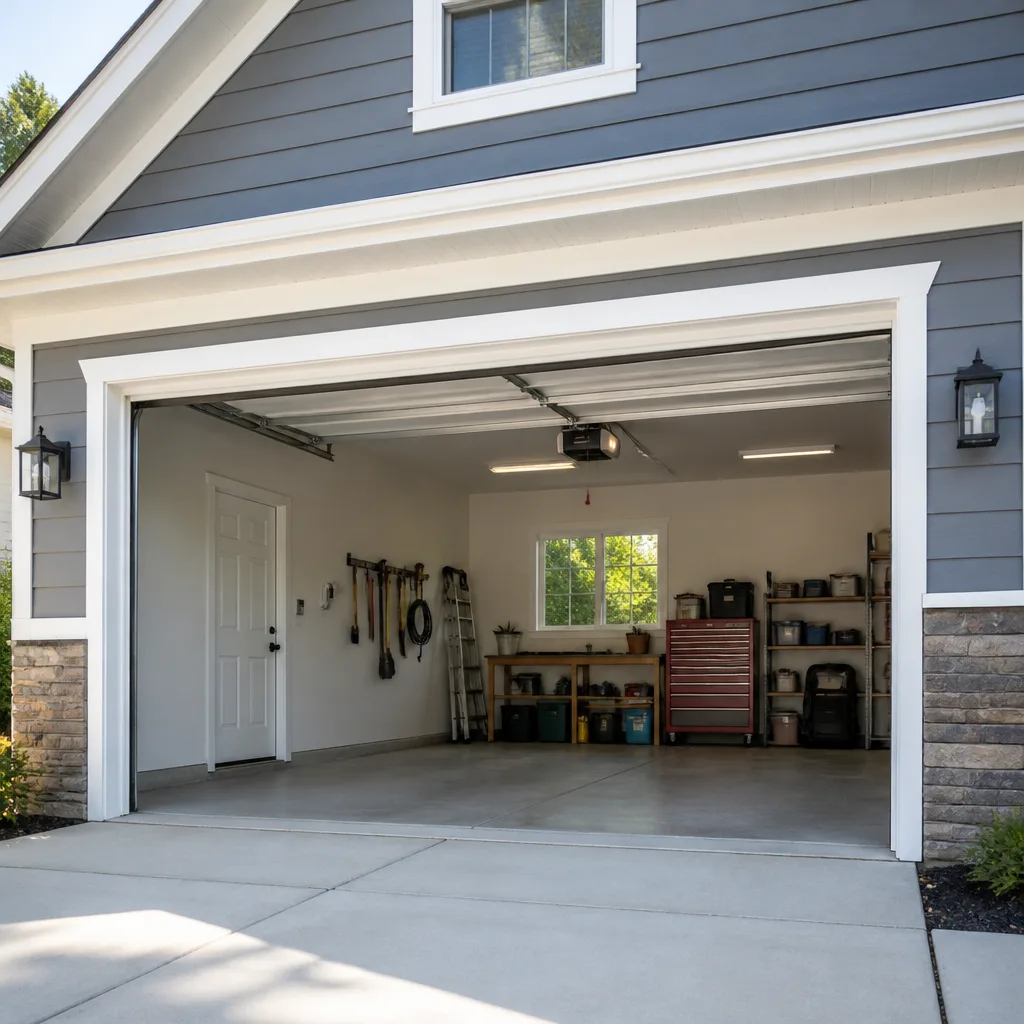 LiftMaster openers
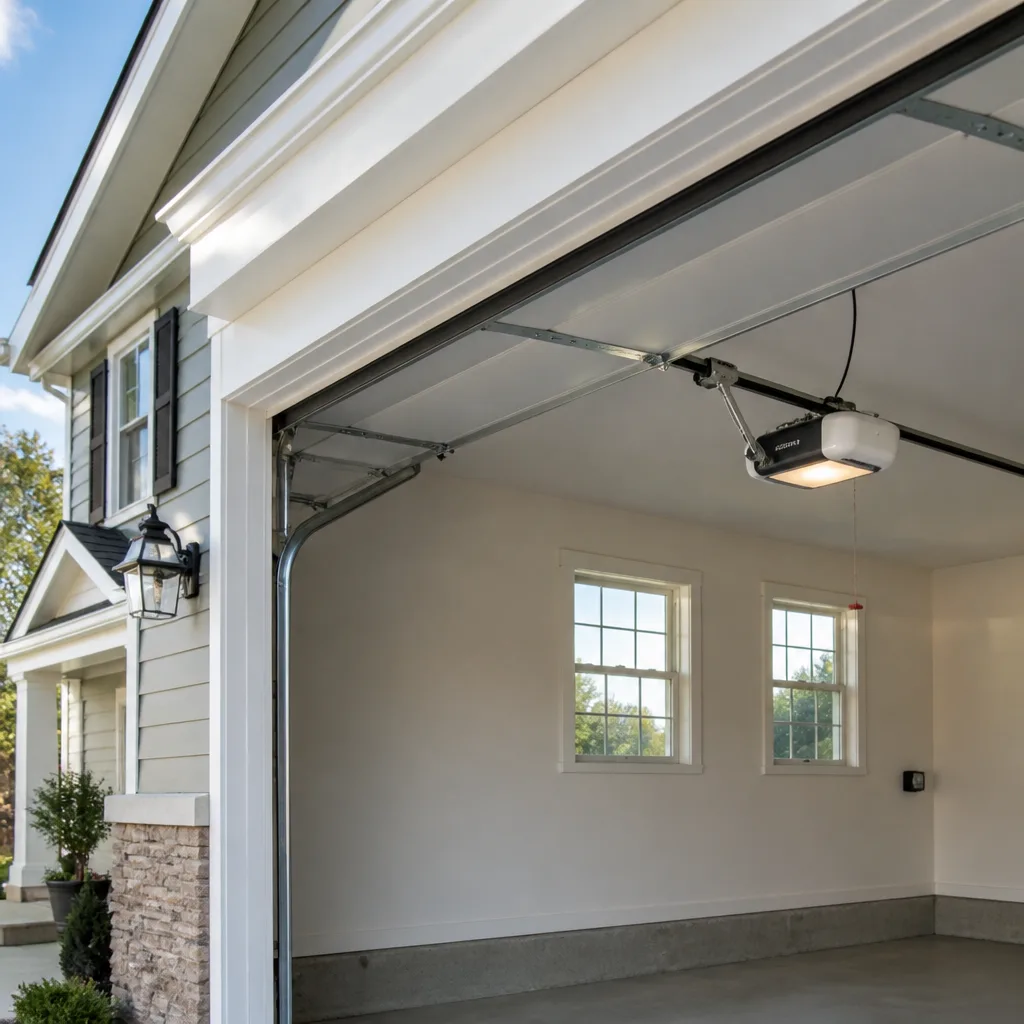 Chamberlain openers
Full 25-point door and opener safety check with every visit - springs, cables, rollers, tracks, and your LiftMaster or Chamberlain opener included
You get a price before we start. It does not change when the pro arrives.
Get your free estimateDIY vs Professional Garage Door: The North Miami Homeowner’s Decision Guide
Most homeowners think the garage door repair decision comes down to skill. It doesn’t. It comes down to physics, code, and warranty language. A wound torsion spring stores enough energy to kill someone when it lets go, and no amount of confidence changes that. But swapping a photo-eye sensor or reprogramming a remote is genuinely a 15-minute job for a careful homeowner. This guide draws the line task by task so you spend money only where it counts and keep your hands off the parts that bite. We’ll cover what North Miami law expects, what voids your warranty, and what actually happens when a DIY repair goes sideways.
Quick Answer
In North Miami, you can safely handle openers remotes, photo-eye sensors, lubrication, balance checks, and weatherstripping yourself. Anything involving torsion or extension springs, cables, drums, and bottom brackets is professional-only work because a released spring or cable causes serious injury. Track realignment on a hurricane-rated door and any structural or new-door installation touch Florida Building Code compliance, which generally requires a licensed contractor and a permit. When in doubt on a spring, cable, or track, call a specialist.
Styles & brands we work with
- Raised-panel steel
- Carriage house
- Modern flush
- Full-view glass
- LiftMaster openers
- Chamberlain openers
Table of Contents
- The Three-Tier Task Classification
- DIY-Safe Tasks You Can Absolutely Do Yourself
- Professional-Only Tasks: The Injury and Code Line
- Florida Building Code: What You Legally Can’t Do Yourself
- How DIY Repairs Interact With Manufacturer Warranties
- The Real Cost Comparison: DIY Parts vs Professional Service
- Three DIY Attempts That Go Wrong in North Miami
- When to Call a Professional
- Frequently Asked Questions
The Three-Tier Task Classification
The DIY vs professional question isn’t binary. Every garage door task falls into one of three buckets, and the bucket is decided by the consequence of failure, not by how hard the task looks. A task that’s fiddly but harmless is different from a task that’s simple but lethal.
We sort jobs this way because “complexity” is a useless measure. Replacing a bottom seal looks easy and mostly is, but on a hurricane-rated door the wrong seal or the wrong fastener pattern can compromise the door’s wind rating. Meanwhile, re-engaging a door that’s come off track looks scary and can be genuinely simple, or it can hide a bent panel that will fail under load. The classification below is the one we use when we walk through a North Miami home.
- DIY-safe: Failure causes minor inconvenience or a small cost. Nothing is stored under tension that can release violently. Examples: remote programming, photo-eye alignment, lubrication, weatherstripping.
- DIY-with-caution: Failure causes moderate cost or a safety concern, and the task is recoverable. Examples: adjusting opener travel limits, replacing a wall-mounted control, tightening track bolts on a door that’s otherwise sound.
- Professional-only: Failure causes serious injury, structural damage, code violation, or a voided warranty. Examples: torsion and extension spring replacement, cable replacement, drum and bottom-bracket work, track realignment after a major derailment, any new-door installation.
Notice that the bucket isn’t about your ability. A skilled DIYer can still be killed by a spring. And a brand-new homeowner can safely swap a Genie remote. The line is about what happens if the task fails mid-repair.
DIY-Safe Tasks You Can Absolutely Do Yourself
These are the jobs where doing it yourself saves real money and doesn’t trade safety for a few bucks. If your garage door problem lands here, put the phone down and grab a ladder.
- Reprogram the opener remote or keypad. Every residential opener has a “learn” button on the motor head. Press it, then press the remote button within the pairing window. LiftMaster and Chamberlain units follow the same pattern; Genie and Craftsman units follow their own sequence but are equally doable. The manual for your model walks you through it in a few lines.
- Realign photo-eye sensors. The two small sensors at the base of the track should face each other and light up steadily. If one is blinking, it’s misaligned or blocked. Loosen the bracket, aim it until both LEDs are solid, and tighten. Nine out of ten “door won’t close” calls are this.
- Lubricate moving parts. Use a garage-door-specific lubricant on hinges, rollers, and the torsion spring (the spring itself gets a light coat, not a heavy one). Do this every few months. In North Miami’s humid air, metal parts benefit from a regular pass.
- Test the safety reverse. Place a 2×4 flat on the floor in the door’s path and close it. The door should reverse on contact. If it doesn’t, the opener’s force or travel settings need attention.
- Replace weatherstripping on a standard door. The rubber flap along the bottom edge pulls out and slides back in on most non-hurricane-rated doors. This is a homeowner job on a standard door.
- Balance test the door. Pull the release handle to disconnect the opener, then lift the door halfway by hand. It should stay put. If it drops or rises on its own, the spring tension is off and you should stop here and call a pro.
- Tighten visible bolts and screws. The brackets that hold the track to the wall can work loose over time. A socket wrench and a few minutes can quiet a rattling door.
That’s a real list, and it covers a surprising share of service calls. If your issue is on it, you don’t need us. If it isn’t, keep reading.
Professional-Only Tasks: The Injury and Code Line
This is the section that matters most. These tasks are not “harder” versions of the DIY tasks above. They’re tasks where a mistake can kill you, and the equipment involved doesn’t care how careful you’ve been.
Torsion and extension springs
A fully wound torsion spring stores enough mechanical energy to cause fatal injury if it releases uncontrolled. That is not a scare tactic, and it isn’t about your skill. Springs are wound under extreme tension, and the tools used to wind them – winding bars – must be fully seated in the winding cone with every turn. A bar that slips out of the cone under tension becomes a projectile. A spring that snaps mid-wind releases stored energy in a fraction of a second. This is why garage door spring repair is a named specialty rather than a routine task. Our technicians approach every spring with the assumption that it can hurt them, and that’s the right assumption.
Cables, drums, and bottom brackets
The cables on a garage door run under tension from the springs to the bottom brackets. If you remove the bottom bracket while the door is under tension, the cable can whip free with enough force to sever a finger. Replacing cables requires releasing tension safely first, which requires knowing exactly how much tension is stored and where. There’s no version of this that’s safe to improvise.
Track realignment after major derailment
If the door has come completely off track or a panel is bent, don’t force it back. A door that’s come off track under load can fall, and a bent panel can fold under spring tension. This is professional territory, and it’s also often the moment where a damaged panel needs replacing rather than bending back into shape. That judgement call matters more than the labor.
New door installation and any structural work
Installation touches the building structure, the code, and the wind rating on a hurricane-rated door. We’ll cover the legal side in the next section. The short version: this is beyond the DIY line.
If any of the above describes your situation, stop. Call (888) 399-4139 and let a specialist look at it. We offer free estimates in North Miami. It’s cheaper than an emergency room visit, and it’s cheaper than a botched repair.
Florida Building Code: What You Legally Can’t Do Yourself
North Miami sits in a high-wind region, and garage doors are one of the most wind-vulnerable openings on a home. That’s why the Florida Building Code treats garage door installation, replacement, and certain structural modifications as permitted work that generally requires a licensed contractor and inspection. The line isn’t about your ability. It’s about who’s allowed to sign off.
What typically requires a permit and a licensed contractor
- Installing or replacing a garage door, including the door itself and its anchorage to the structure
- Changing the door’s wind-load rating or replacing a hurricane-rated door with one of a different rating
- Structural changes to the header, jamb, or framing around the opening
- Any work that changes the door’s conformance with the wind-load requirements the home was permitted under
Replacing a spring, an opener, or a sensor is generally not a permitted activity, but installing a door is. That distinction matters: if your existing door is hurricane-rated, the rating is part of your home’s permitted configuration, and swapping the door for a non-rated one can put you out of compliance. The right move is to confirm with your city’s building department before any installation or replacement. Rules and timelines vary, and we won’t guess at them. Ask the authority that will inspect the work.
Why this matters even if you’re handy
An unpermitted installation can surface at resale, during an insurance review, or after a storm. The cost of redoing permitted work is higher than the cost of doing it right the first time. A licensed local professional handles the permit and stands behind the installation. That’s a different value proposition than “save a few hundred by installing the door yourself.”
Where a specialist fits
For the non-permitted work – springs, openers, diagnostics – a specialist is still the right call, because the injury risk dwarfs the cost. For the permitted work, a specialist is required, because a licensed contractor has to be in the loop. Either way, the answer to “can I do this myself” on a North Miami garage door is more often “not this part.”
How DIY Repairs Interact With Manufacturer Warranties
This is the quiet cost most homeowners never see coming. A repair that works fine can still void coverage on the parts it touched, and the warranty language on major brands is specific about what counts as unapproved work. We work across Clopay, Amarr, LiftMaster, Chamberlain, Genie, Wayne Dalton, Craftsman, and Raynor every week, and the warranty patterns are consistent enough to describe.
What typically voids coverage on Clopay and Amarr doors
Manufacturer warranties on door sections usually cover defects in materials and workmanship, but they exclude damage caused by improper installation, unauthorized modifications, or failure to follow the published maintenance schedule. Bending a panel back into shape after a derailment counts as an unauthorized modification. Replacing a hurricane-rated door’s hardware with non-original hardware can do the same. If a panel fails after you’ve “fixed” a bend, the claim may be denied because the modification is what caused the failure.
What typically voids coverage on LiftMaster and Chamberlain openers
Opener warranties exclude damage from improper installation and from using the opener outside its rated duty cycle or lifting capacity. A common void happens when a homeowner connects a heavier door or swaps springs to “make it easier” on the opener – the opener then runs beyond spec and the warranty question gets complicated. If you’ve changed the door’s weight or spring setup, the opener’s coverage may not survive an inspection.
The practical rule
- Keep receipts and documentation for any part you replace
- Use OEM parts that match your model, not universal replacements, for anything covered by warranty
- Don’t modify door weight, spring setup, or hardware without checking warranty terms first
- If a part is under warranty, let the manufacturer’s process run rather than swapping it yourself
None of this is a reason to avoid all DIY. It’s a reason to know which parts of your door are still covered before you touch them. A quick read of your warranty card is worth more than an hour of YouTube.
The Real Cost Comparison: DIY Parts vs Professional Service
The honest cost comparison isn’t “part price vs service price.” It’s “part price plus your time plus the cost of undoing a failed attempt vs professional service.” The second number is what matters, especially on the tasks where a failed attempt is expensive to reverse. Here’s how the math runs for a North Miami homeowner:
- DIY cost: the part (typically $30-$120 for common components like sensors, remotes, hinges, and rollers; a torsion spring is often $30-$70 for the part alone), plus an hour or two of your time, plus the tools you need.
- Professional service cost: a service call plus labor, typically a plate of $80-$180 for diagnostics and small repairs, and higher for spring, cable, or track work. Estimates are free and quoted before work starts.
- Failed DIY cost: the original part price, plus the replacement part, plus the labor to undo your attempt, plus any damage to the door, opener, or track. In the worst cases, that’s a whole panel or a whole door.
The math is simple. On DIY-safe tasks, you save real money. On professional-only tasks, the DIY path is a bet with a bad payout. A torsion spring part is cheap because the risk isn’t in the part – it’s in the winding. If you’ve never wound a spring, the part price is the small number and the risk is the large one.
That’s why we lead with repair first, replace only when necessary. A door that’s been maintained and not over-modified usually lasts longer than one where every part has been swapped by a different owner. Our technicians have up to 15 years of experience, and they’ve seen what a well-maintained door looks like versus one that’s been DIY’d a dozen times over a decade.
Three DIY Attempts That Go Wrong in North Miami
We work on doors across North Miami, and there are three DIY attempts we see go wrong regularly. None of them are about skill. Each one fails because the task has a hidden risk that isn’t visible to a first-timer. If you’re considering any of these, read this section twice.
1. Cable winding
The cable runs from the drum at the top of the door to the bottom bracket, and it’s under tension whenever the door is up. A homeowner who tries to re-spool a slipped cable – or replace a frayed one – is working with a loaded cable. If the cable slips off the drum while tension is applied, the door can drop or the cable can whip. The correct procedure involves releasing spring tension first, and that’s the part that isn’t obvious. A door that “just slipped off” the drum usually has a spring or drum problem behind it, and re-spooling the cable without addressing that is a temporary fix at best and a dangerous one at worst.
2. Track adjustment
The vertical and horizontal tracks look adjustably mounted, and technically they are. But the tracks are aligned to the door’s travel path, and moving one can throw off the door’s alignment or cause the rollers to bind. On a hurricane-rated door, the track and its anchorage are part of the wind-resistance system. Adjusting a track on a rated door without understanding the anchorage is a code question, not just a mechanical one. We’ve seen homeowners get the door rolling again only to have it fail again within days because the track was never square.
3. Bottom seal replacement on a hurricane-rated door
Swapping the bottom seal on a standard door is a homeowner job. On a hurricane-rated door, it can be a problem. The bottom seal and the bottom section are part of the system that held the door’s rating, and using the wrong seal or an aftermarket seal that doesn’t match the original can compromise the door’s performance under wind load. If you’re not sure whether your door is rated, look for a label or check the permit history with the city. If it is rated, use a specialty part and let a professional confirm it. This is one of the calls that makes us wince, because the seal itself is cheap and the consequences aren’t.
What these three have in common
Each one has a visible, simple-looking fix and a hidden risk that only shows up if you know the system. That’s the pattern. The tasks that go wrong aren’t the ones that look hard. They’re the ones that look easy.
See the difference
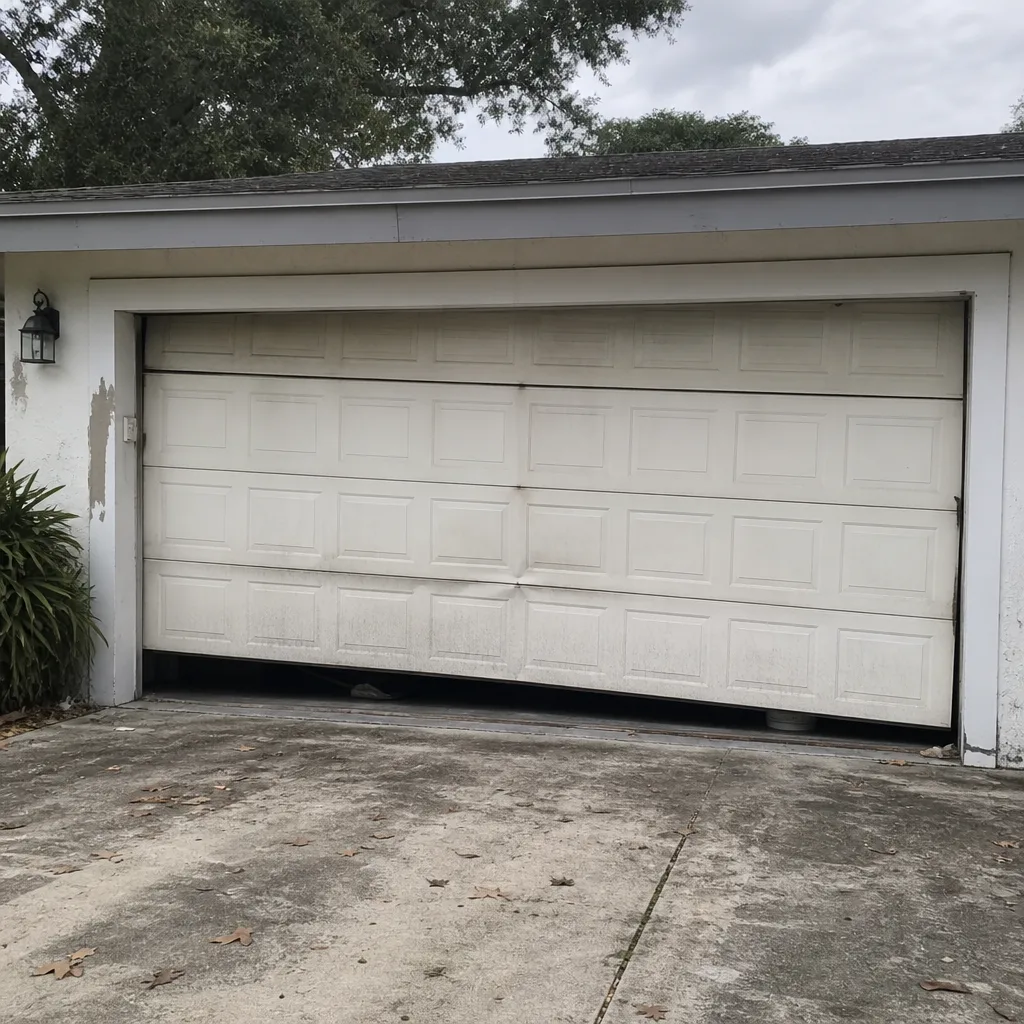 Before
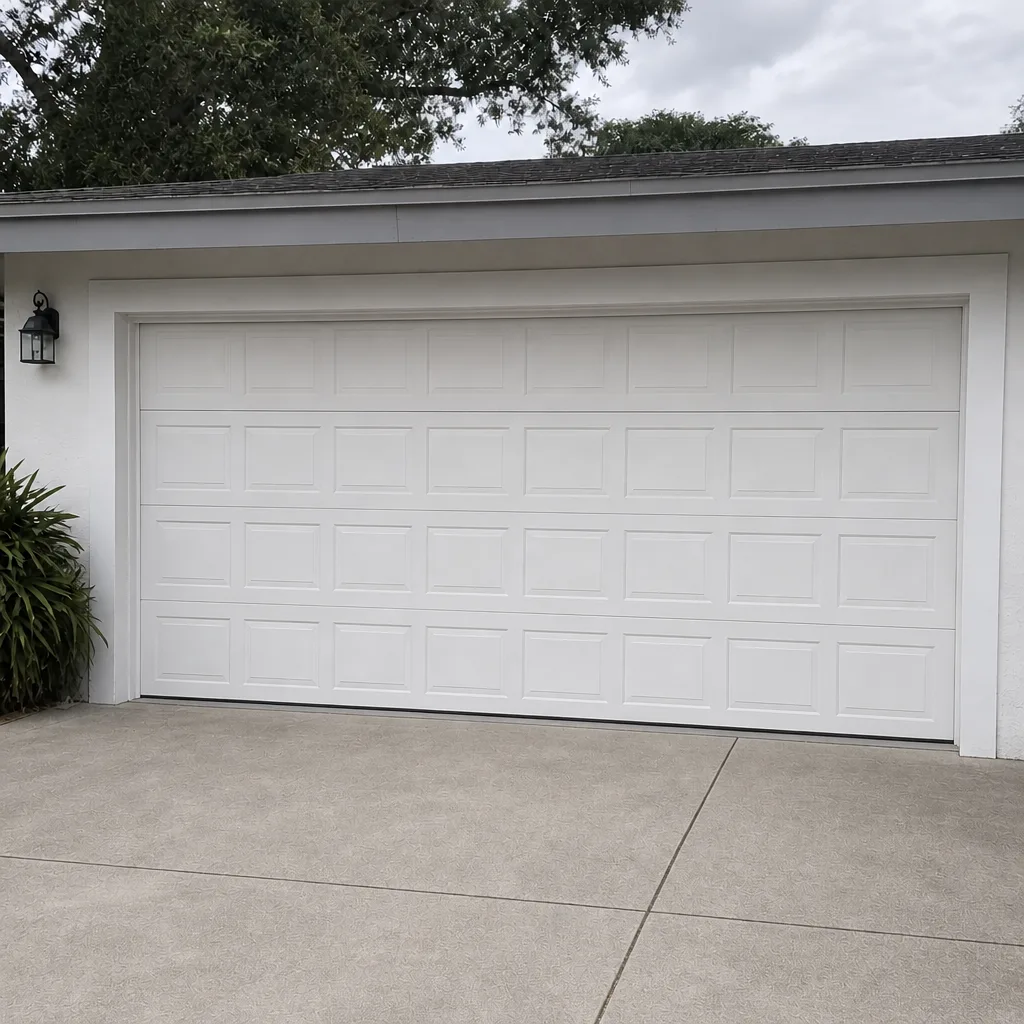 After
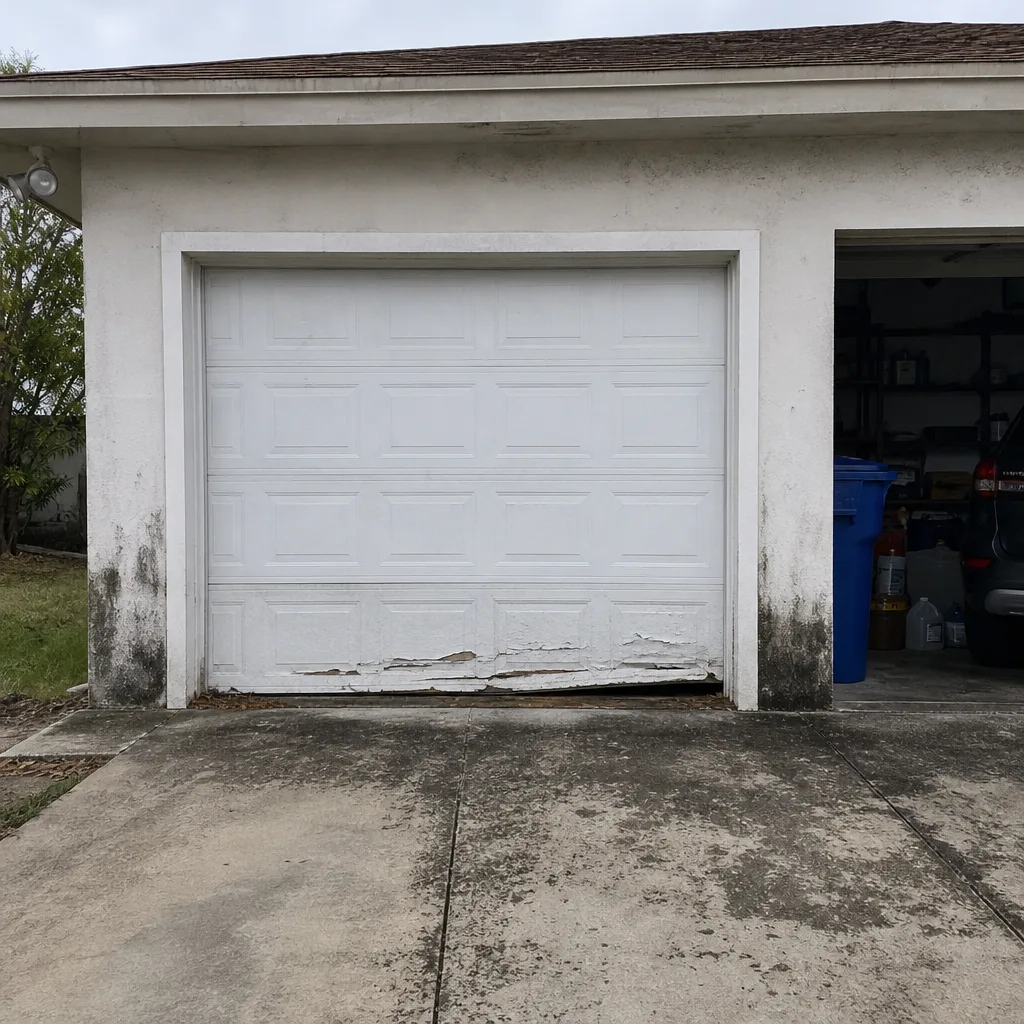 Before
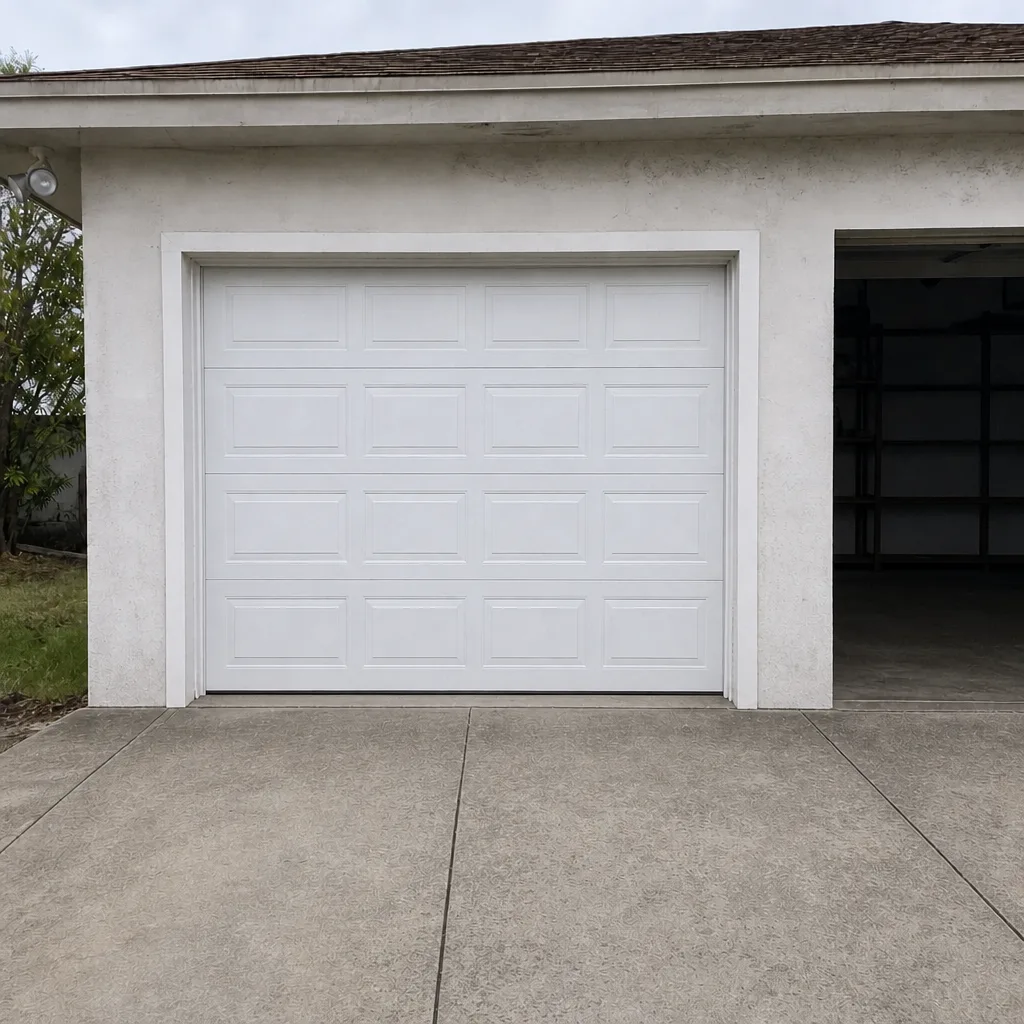 After
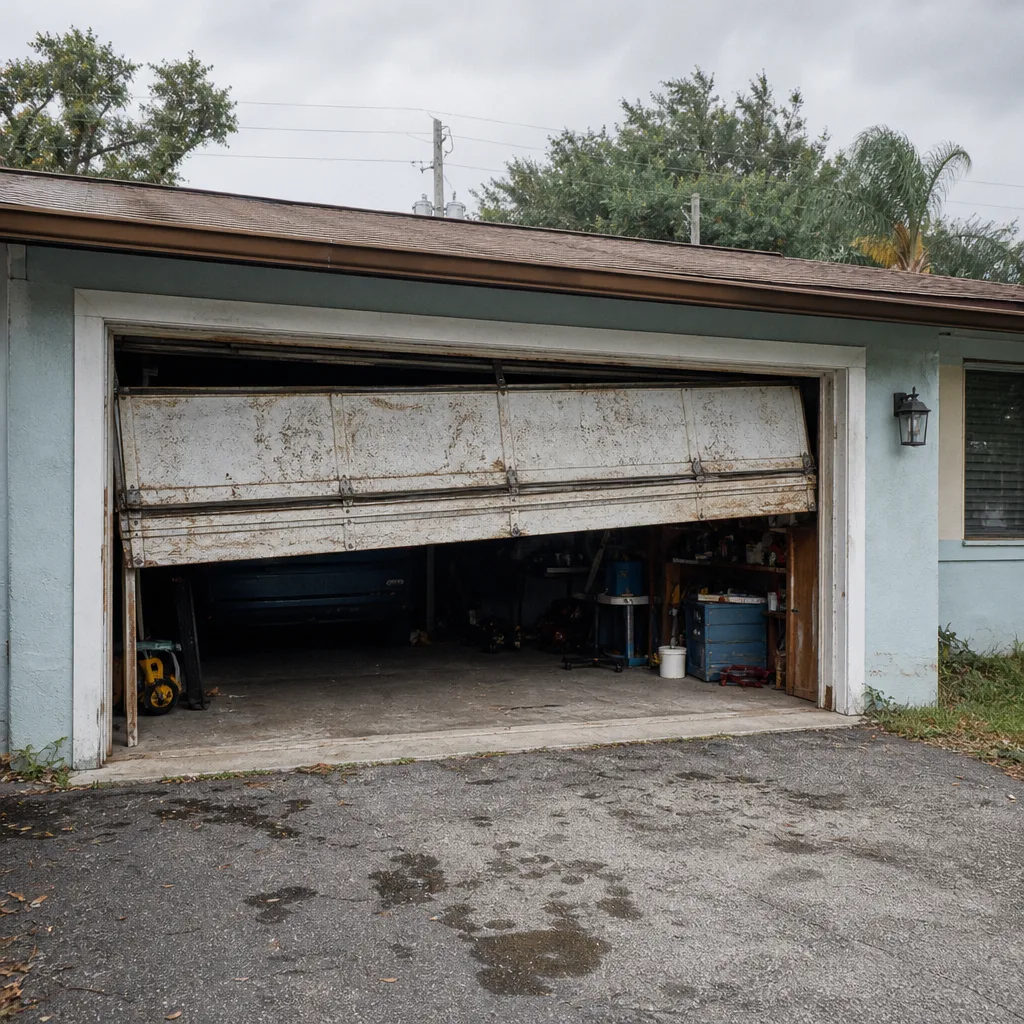 Before
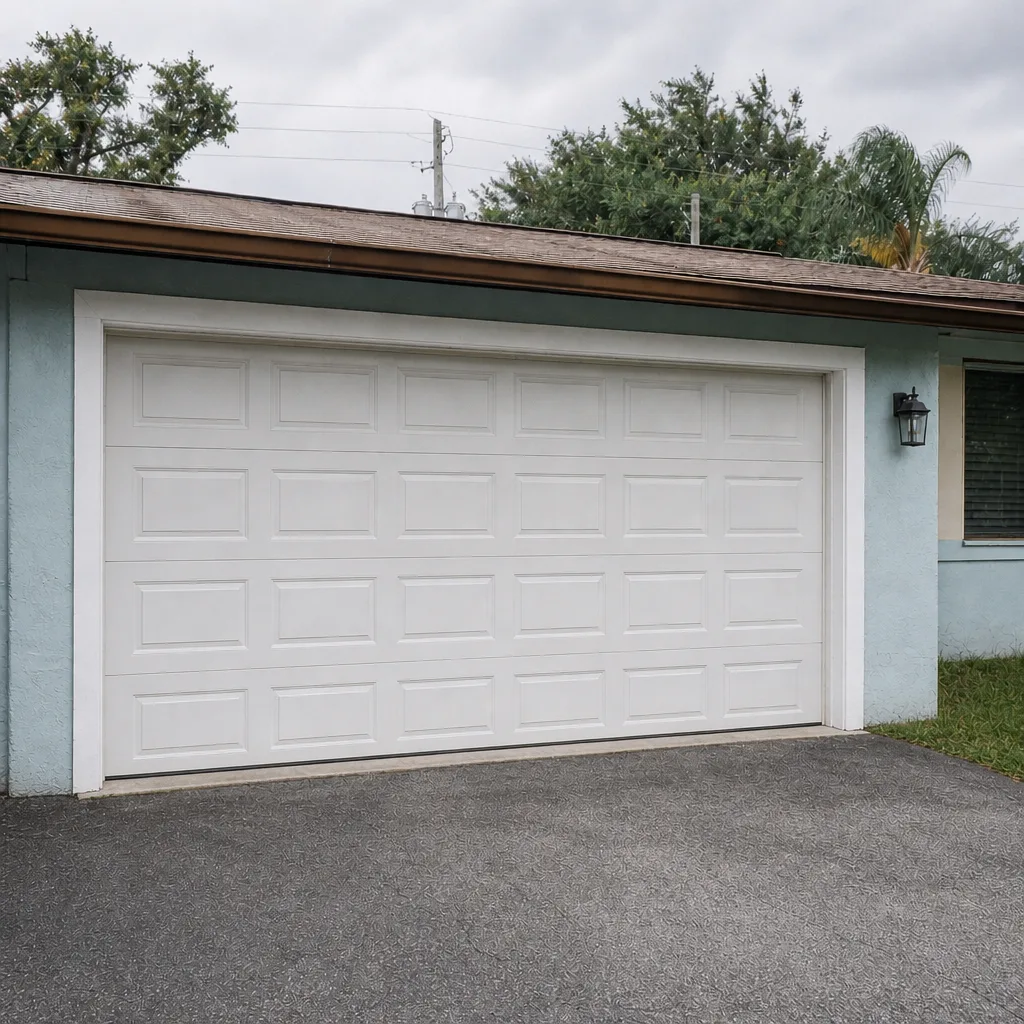 After
Common Mistakes to Avoid
- Winding a torsion spring without winding bars. A screwdriver or a pair of pliers will slip out of the cone under tension. Every time. That’s how people get hurt, and it’s how doors get destroyed.
- Removing the bottom bracket while the door is under tension. The cable is loaded from the spring to the bracket. If you don’t release the spring first, the bracket and cable can let go with force. There’s no safe shortcut here.
- Swapping a heavier or lighter spring to “help” a struggling opener. The spring must match the door’s weight. The wrong spring overloads the opener or leaves the door feeling heavy and dropping. If the opener is struggling, diagnose the opener – don’t guess at the springs.
- Adjusting the track on a hurricane-rated door without checking the code. North Miami garage doors in high-wind areas are permitted with a wind-load rating, and changing the track or anchorage can affect that. When in doubt, ask the city’s building department before you touch it.
- Ignoring a balance test. If the door won’t stay at halfway when you disconnect the opener, the spring tension is off. Keep the door closed and call a pro instead of running the opener on a door that’s fighting the spring.
- Using the wrong lubricant. WD-40 is not a garage door lubricant. It cleans and displaces but doesn’t leave the protective film the rollers and hinges need. Use a garage-door-specific product.
- Letting a remote or keypad problem turn into an opener replacement. A dead remote is usually a battery. A keypad that stopped working is usually a reprogramming. Neither is a reason to replace a Genie or LiftMaster opener. garage door opener repair starts with diagnosis, not replacement.
- Skipping the free estimate. If you’re unsure whether a task is DIY-safe, the cost of asking is zero. The cost of guessing can be a whole door.
When to Call a Professional
Call a professional if the door won’t stay at halfway when you test the balance, if you see a broken or sagging spring, if the cable is loose or off the drum, if the door has come off track, or if the opener runs but the door doesn’t move. Those are the tasks that carry injury or code risk, and no amount of confidence changes that. Also call if the door is hurricane-rated and you’re considering any modification to the seal, track, or hardware. The stakes on a rated door are higher than they look. North Miami Garage Door Repair Pros offers free estimates in North Miami – call (888) 399-4139 and we’ll tell you exactly what we’d do. Our technicians have up to 15 years of experience, and we can work with your insurer on storm-related repairs.
If you need garage door repair for a door that’s off track or won’t move, that’s the call to make. If you’re planning a new installation, we handle that too. If the door is stuck right now, our emergency service is a dedicated offering, not a generic on-call line. We also work on North Miami Garage Door Repair Pros brand parts for the major opener and door lines. Same day service is available for repairs; installation is measured, ordered, and scheduled.
Frequently Asked Questions
No. Torsion and extension springs are professional-only work because a wound spring stores enough energy to cause fatal injury if it releases uncontrolled. The correct tools and procedure exist, but they require training and the consequences of a slip are not recoverable. A spring call should start with a trained technician. Call (888) 399-4139 for a free estimate.
In most cases, yes. Garage door installation and replacement in a high-wind region typically require a permit and a licensed contractor, and the door’s wind-load rating has to match what the home was permitted under. Confirm the specifics with your city’s building department before you buy a door. The permit is part of the job, not a formality.
Usually not, if you use an OEM replacement sensor that matches your model and the opener was installed correctly. Warranty terms on LiftMaster and Chamberlain openers are specific about approved parts, though, so check your warranty card before you swap the part. If the sensor is under warranty, let the manufacturer’s process run instead of replacing it yourself.
No. A door that’s come off track under load can fall, and the cause is often a bent panel, a broken spring, or a cable problem. Forcing it back on can make the damage worse and put you in the path of a door that’s no longer supported. Keep it closed and call a professional. Call (888) 399-4139 for a free estimate.
Spring repair is quoted per spring, and a matched pair is usually replaced together, so a pair costs about twice the single-spring estimate. We don’t quote a price before looking at the door because the spring size, the door weight, and the condition of the cables all affect the job. Estimates are free, and the written estimate sets the final price before any work starts. Call (888) 399-4139 for an exact quote.
Not on your own, and we’d advise against it without checking with the city first. The door’s rating is part of the home’s permitted configuration, and changing it can put you out of compliance and affect your insurance. A specialist can tell you what your options are without touching the rating. In North Miami this is a code question, not a cosmetic one.
The Bottom Line
The DIY vs professional line on a North Miami garage door is drawn by consequence, not by skill. Remote programming, sensor realignment, lubrication, balance checks, and standard weatherstripping are yours to handle. Springs, cables, drums, bottom brackets, track realignment after a derailment, and any installation are professional-only work because the failure modes are injury or code violations. Permit-triggering work in this region needs a licensed contractor, and DIY modifications can quietly void warranty coverage on Clopay, Amarr, LiftMaster, and Chamberlain products. When in doubt on a spring, cable, or track call, call a specialist. Free estimates, quoted before work starts.
If you’re ready to sort out your garage door, call (888) 399-4139. We’ll give you a free estimate, tell you what’s safe to do yourself, and quote the rest before any work begins.
Written by the team at North Miami Garage Door Repair Pros.