Last updated November 23, 2026
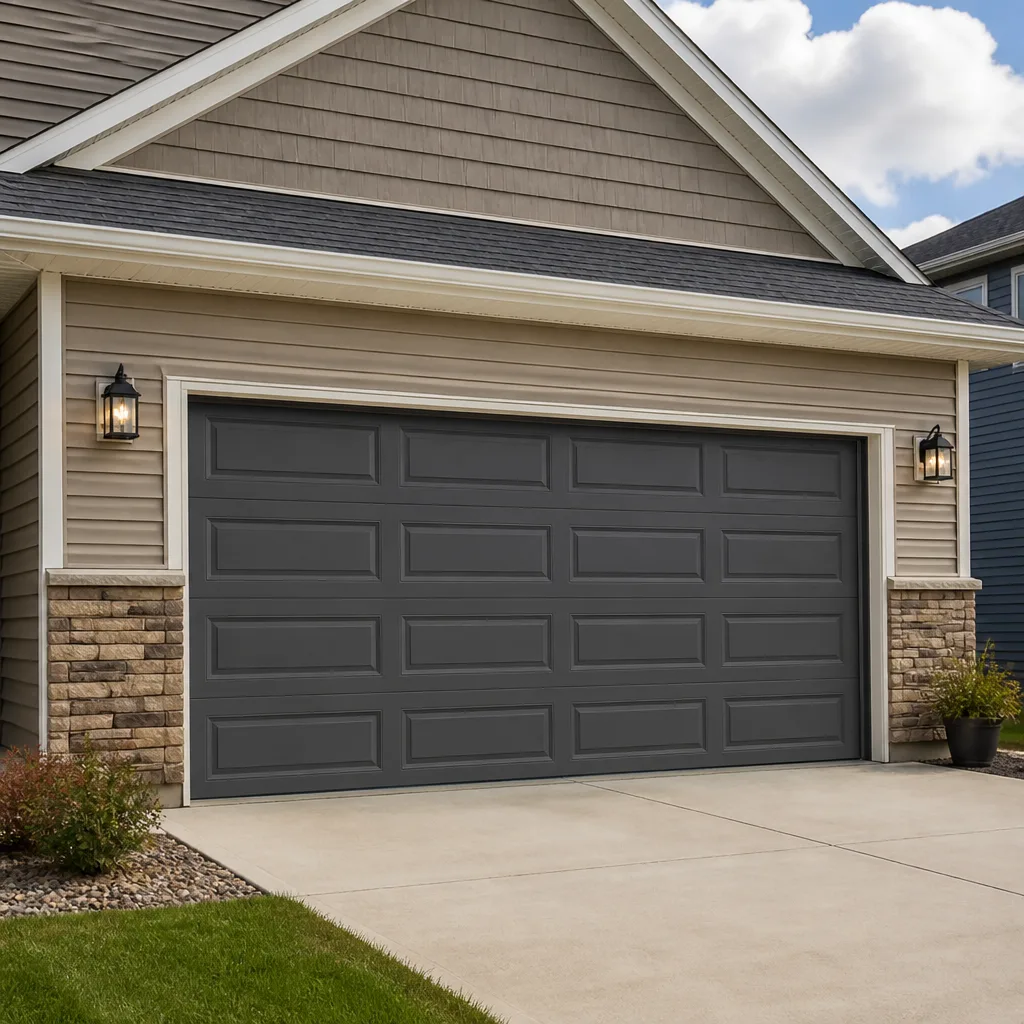 Raised-panel steel
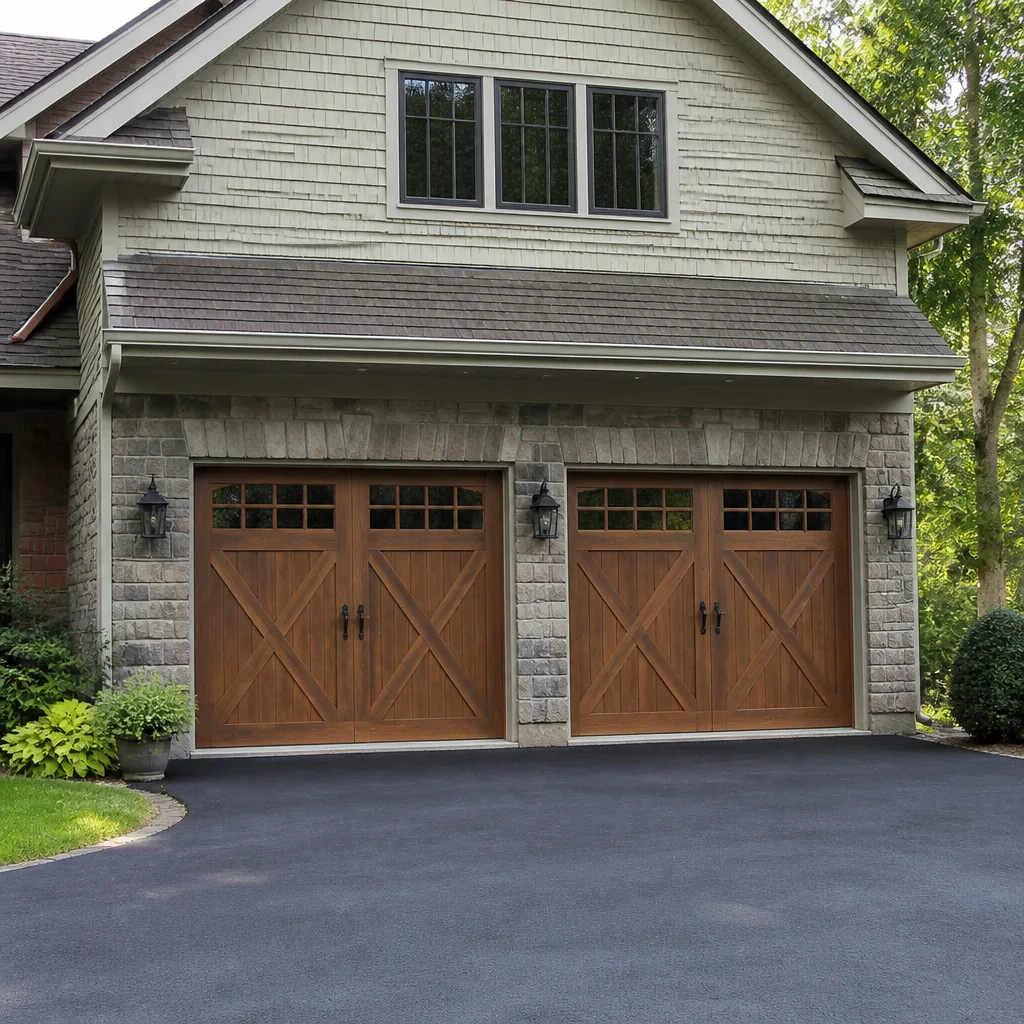 Carriage house
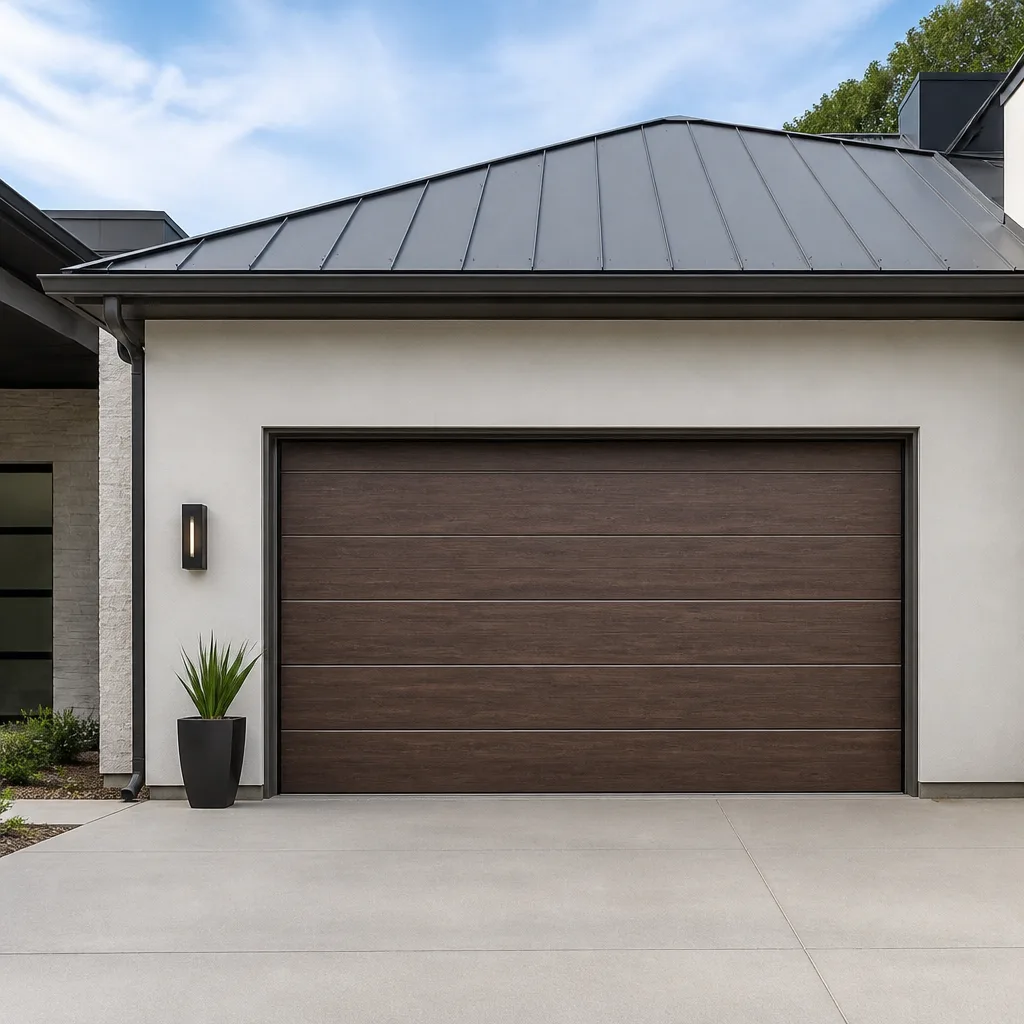 Modern flush
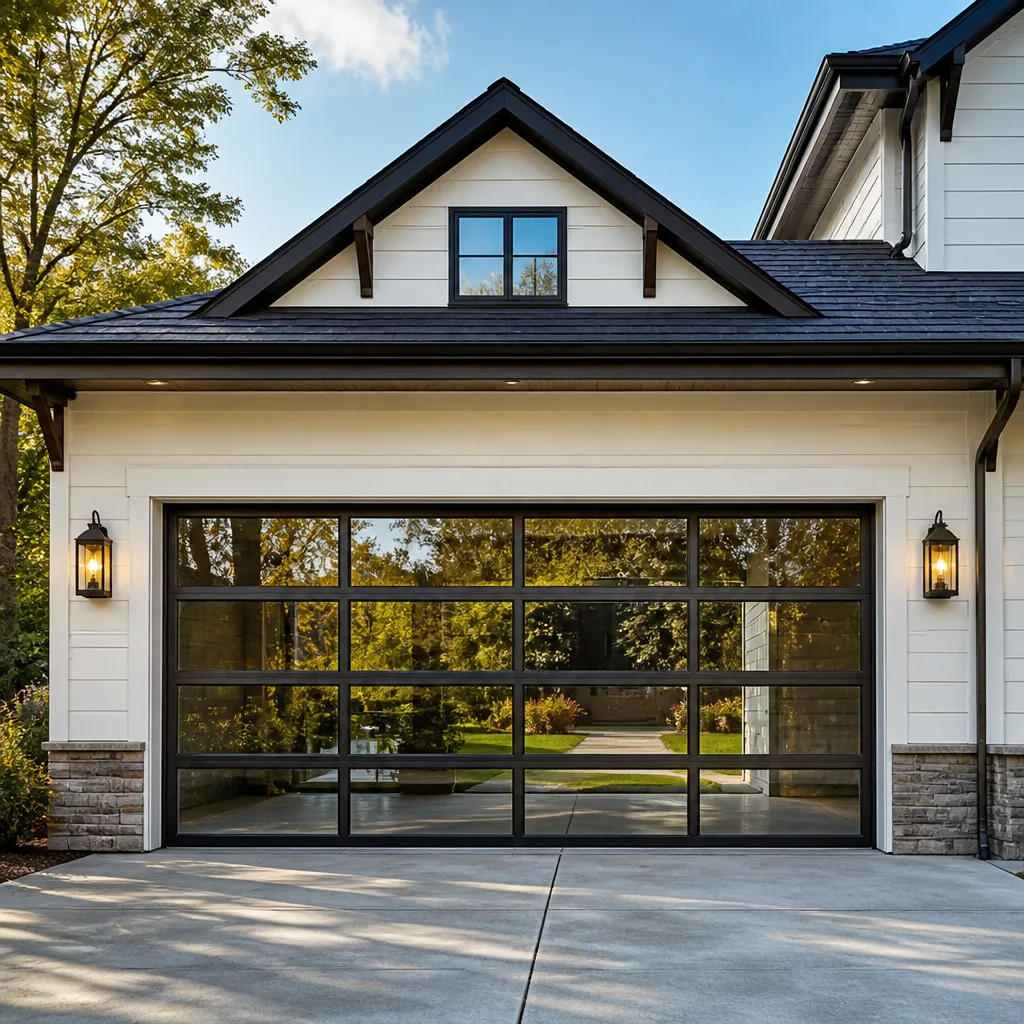 Full-view glass
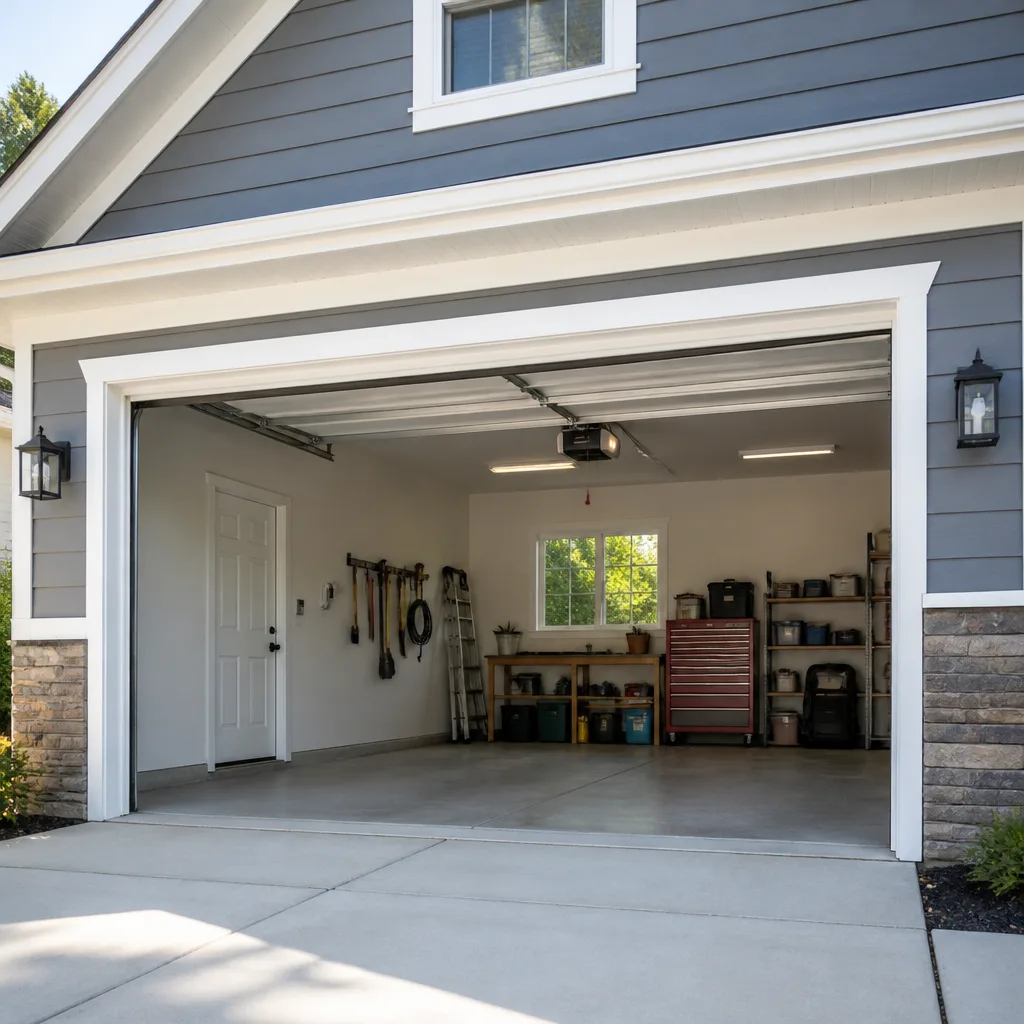 LiftMaster openers
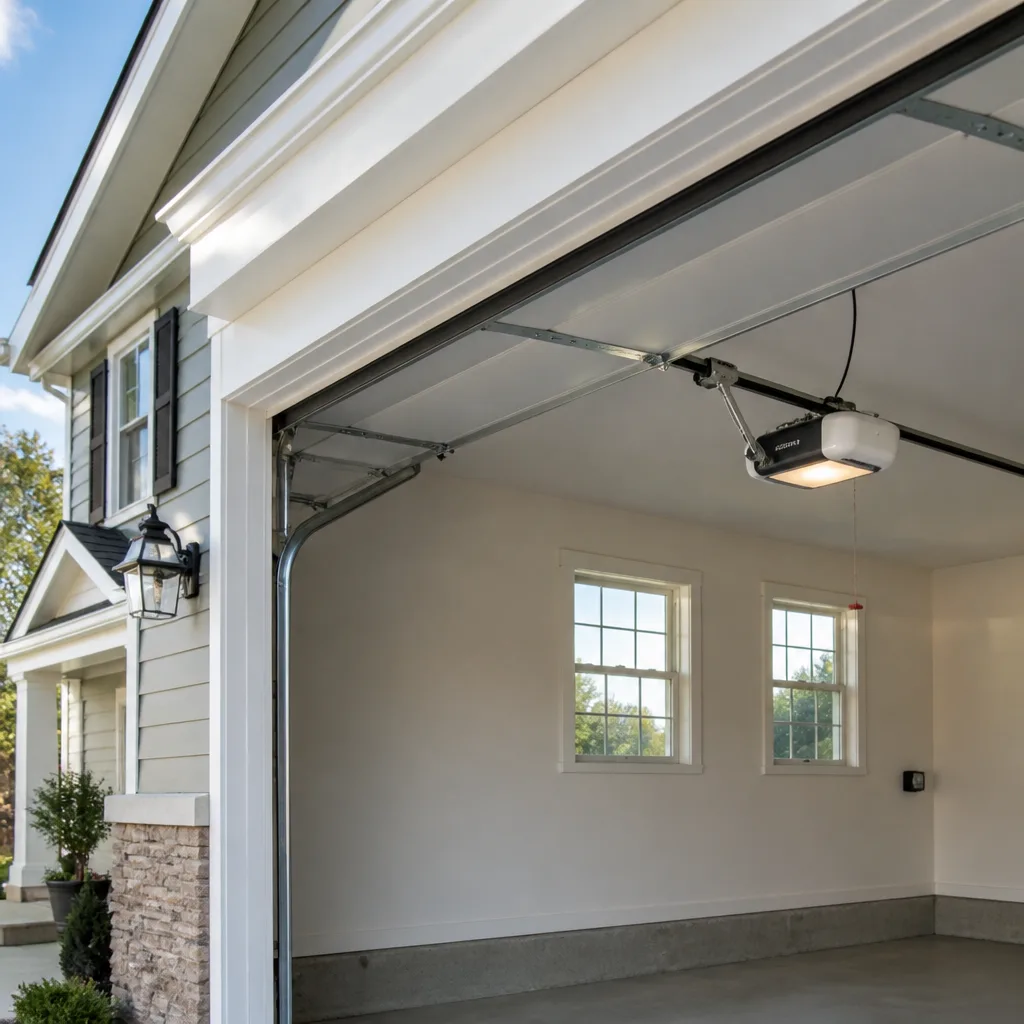 Chamberlain openers
Full 25-point door and opener safety check with every visit - springs, cables, rollers, tracks, and your LiftMaster or Chamberlain opener included
You get a price before we start. It does not change when the pro arrives.
Get your free estimateGarage Door Warning Signs: A North Miami Homeowner’s Reference Guide
A door that hesitates for two seconds before it closes isn’t “getting old.” It’s a diagnostic signal, and a fairly precise one: most hesitations trace back to a misaligned photo-eye or a logic board fault, and a technician who hears “it pauses, then finishes the cycle” already knows where to look first. That’s the problem with most warning-sign lists. They tell you a grinding door is bad news and leave it there. This guide does something different. We pair each symptom with the two or three failures most likely behind it, rank those causes, and mark each symptom as safe to keep using or stop right now. That distinction saves North Miami homeowners from two expensive mistakes: paying for a repair that doesn’t touch the real problem, or running a door that’s about to hurt someone.
Quick Answer
A garage door warning sign is any new sound, pause, drift, or visual change in how your door moves, and each one points to a specific mechanical cause. Some signs, like grinding or a sagging section, mean a single component is failing and the door needs service soon. Others, like a snapped spring or a door hanging off its track, mean stop using the door immediately and call a professional. Knowing which is which is the whole game.
Styles & brands we work with
- Raised-panel steel
- Carriage house
- Modern flush
- Full-view glass
- LiftMaster openers
- Chamberlain openers
Table of Contents
- The Symptom-to-Cause Matrix: What Each Sign Actually Means
- Safe to Operate or Stop Right Now? A Clear Threshold
- North Miami Warning Signs You Won’t Find in Generic Guides
- Is It the Opener or the Door? A Two-Minute Check With No Tools
- Repair or Replace: Signs a Door Is Nearing End of Life
- Brand-Specific Signals Worth Recognizing
- Six Checks You Can Do Yourself at the Start of Every Season
- What to Have Ready When You Call
The Symptom-to-Cause Matrix: What Each Sign Actually Means
Every warning sign on a garage door is a physical event, and physical events have causes. The list below ranks the likely causes for the five most common symptoms we diagnose, most probable first. Treat the rankings as a starting point, not a verdict. A technician confirms the cause by watching the door cycle and inspecting the hardware.
- Grinding or scraping: Most likely dry or worn rollers, then a misaligned or bent track, then a failing bearing plate. Grinding that appears only on one side usually means the track, not the rollers.
- Hesitation before moving: Most likely an obstructed or misaligned photo-eye, then a failing logic board, then a worn drive gear in the opener. Hesitation paired with the light flickering points hard at the safety sensors.
- Uneven movement (one side lifts first): Most likely cable tension imbalance, then a weakening spring on one side, then a bent vertical track. A door that lifts crooked is flexing panels it isn’t built to flex, so this one moves up your list fast.
- Sagging or cracked panel: Most likely impact damage from a vehicle or storm debris, then rusted panel seams, then a hinge pulling free. A cracked panel is a structural warning, not cosmetic.
- Opener runs but the door doesn’t move: Most likely a broken torsion spring, then a stripped opener gear, then a snapped lift cable. If the motor hums and the door sits still, the spring is the first thing a technician checks.
We work on the door and the operator as one system because that’s how failures actually present. A Craftsman opener that “won’t lift anymore” is often doing exactly what it should: giving up because the spring above the door stopped helping.
Safe to Operate or Stop Right Now? A Clear Threshold
This is the most important distinction in the guide, and most articles skip it. A slow opener is an inconvenience. A broken spring is a stored-energy hazard that can turn a forty-pound door into a falling weight. Here’s how we classify the signs, and why.
Stop using the door immediately
- A snapped torsion or extension spring. A broken spring looks obvious once you know what to look for: a gap in the coil on a torsion spring, or a loose, dangling extension spring. The door’s weight is now unsupported, and the opener is pulling a load it was never designed to lift. Don’t run the opener to “test” it.
- A door hanging off its track, or a cable that’s slack or unwound. Cables and springs operate under extreme tension. Never touch, cut, or try to rewind either one yourself. Call a professional.
- A door that will not stay up on its own. If the door drops when you lift it halfway, a spring or balance component has failed. Keep it closed and call.
- A cracked or badly sagging section. A compromised panel can fail mid-cycle and come down.
Safe to use until you can get it serviced
- A slow or hesitating opener, as long as the door still reverses when it meets an obstruction and the safety sensors are clean and working.
- Grinding or squealing, which usually means lubrication or roller wear. It gets worse with every cycle, so schedule it, but you’re not in danger today.
- A door that lifts a little unevenly but closes fully and reverses correctly. Watch it, don’t wait.
One safety note that matters every time: the door’s reversal system is a life-safety feature. Test it regularly by placing an object in the door’s path and confirming the door reverses. If it doesn’t, stop using the door until it’s fixed. When in doubt about a spring or cable, treat it as a stop and call. Our garage door spring repair service exists precisely because these parts are the highest-tension, highest-risk components on any door, and they deserve a trained specialist, not a weekend attempt.
North Miami Warning Signs You Won’t Find in Generic Guides
National checklists are written for a climate that isn’t ours. South Florida humidity, heavy summer rain, and long stretches of intense sun press on garage doors in ways cold-weather guides never mention. These are the signs we look for on North Miami doors, and what they usually mean.
- Rust streaking on the tracks. It shows up as thin orange lines running down the vertical track, often after a rainy stretch. Rust on the track face means moisture is sitting against the steel, and as the rollers ride that surface they wear faster. Clean and lubricate the tracks, and if the streaking is heavy, have a technician check the track for pitting before it starts binding the rollers.
- Weatherstripping pulling away at the corners. The bottom seal and side trim take the brunt of our summer rain and sun. When the seal curls or separates at the corners, water and pests find the gap. It’s a cheap fix that protects the door frame and the interior.
- A bottom seal dragging or sticking in humidity. A rubber seal that’s swollen or coated in grit will grab the floor and cause the opener to strain on the last few inches of travel. If the door hesitates at the very bottom only, the seal and the floor contact are the first suspects, not the opener.
- Interior condensation on the door panels. A door facing a sun-exposed wall can collect moisture on the inside during the hottest, most humid weeks. Left alone, it feeds rust at the hinges and bottom brackets.
None of these are dramatic. That’s the point. In North Miami, doors rarely fail from one big event. They fail slowly from moisture and heat doing their work until a key component gives out on a day you actually needed the door.
Is It the Opener or the Door? A Two-Minute Check With No Tools
Half the calls we take are really one question: is the trouble in the operator or in the door? You can narrow it down in about two minutes, without a screwdriver, by running a few checks. You’re not repairing anything here. You’re gathering information, and staying safe while you do it.
- Disconnect the opener and test the door by hand. Pull the manual release cord (usually a red handle hanging from the opener rail) to detach the door from the opener, with the door in the fully closed position. Then lift the door by hand to about waist height and let go gently. A door in good balance stays roughly where you put it. A door that feels heavy, drops, or fights you has a spring or balance problem, and the door mechanism is the culprit.
- Watch the safety sensors while the door hesitates. Look at the two small lights near the floor on either side of the door. If one is off, flickering, or misaligned, the opener is being told to stop. Clean the lenses, check that they point at each other, and clear any clutter.
- Note the timing. If the hesitation happens right when the opener starts, or the light flickers, it’s likely the photo-eyes or the logic board. If the door moves freely but the opener can’t lift it, the door mechanism is the issue.
- Listen to the motor. A healthy opener sounds steady. A motor that hums, clunks, or grinds and doesn’t move the door has a stripped gear or a failed component inside the unit.
Reconnect the door when you’re done and tell us what you found. A description like “hand test is easy, but the opener stops halfway up” tells a technician more than a dozen photos. When the operator itself is the problem, our garage door opener repair team handles both belt- and chain-drive units, including WiFi-enabled models from LiftMaster and Chamberlain, and the Genie and Craftsman systems that make up most of the residential market.
Repair or Replace: Signs a Door Is Nearing End of Life
Not every warning sign means the same thing. Some point at a single component you can fix and move on. Others are the door telling you the whole assembly is worn out. Getting this distinction right is the difference between a sensible repair and money down a hole.
Signs that point to one fixable component
- A single grinding or squealing hinge, roller, or bearing
- One panel with impact damage while the rest are sound
- A spring that failed while the door, panels, and track are otherwise in good shape
- An opener that’s failing while the door is balanced and smooth
Signs the door is approaching end of life
- Multiple panels are dented, rusted through at the seams, or separating
- The door needs repeated repairs on different components in the same season
- Rust and pitting along the tracks that no amount of cleaning stops
- A door that’s been rebalanced, re-rolled, or patched and still doesn’t run smooth
Here’s our honest position, and it’s the reason we work brand-agnostic: we don’t sell a single manufacturer’s doors, so there’s no incentive to push a replacement when a repair will do. Repair first, replace only when necessary. When replacement genuinely is the right call, we install from Amarr and Wayne Dalton among others, and you’ll get a free measure and a written price before anything is ordered.
If you’re comparing options, it helps to read how a garage door repair typically goes versus a full installation so you know which path your door is on.
Brand-Specific Signals Worth Recognizing
Garage doors and openers aren’t interchangeable, and knowing your brand helps you describe the problem accurately. We service eight of the most widely installed brands in North America: LiftMaster, Chamberlain, Genie, Clopay, Amarr, Wayne Dalton, Craftsman, and Raynor. Each has quirks worth recognizing.
- LiftMaster and Chamberlain (belt, chain, and WiFi-enabled openers): hesitation and sensor faults are the most common codes, and a misaligned photo-eye is the usual first suspect.
- Genie and Craftsman: a stripped drive gear is a familiar failure mode on older units, especially when the door has been fighting a weak spring for a while.
- Wayne Dalton and Raynor doors: hinges and rollers tend to be the wear points, and the panel construction means a cracked section is worth inspecting before you assume replacement.
- Clopay and Amarr doors: bottom seals and weatherstripping are common entry points for the humidity problems in North Miami, and panel seam rust is the thing to watch.
Technicians who work on your brand regularly diagnose by its logic instead of guessing. That’s the difference between fixing the cause and replacing parts until the symptom goes quiet. If you’re still deciding between repairing the current operator and installing a new door and opener together, our North Miami Garage Door Repair Pros team can walk you through both, with the tradeoffs in plain terms.
Six Checks You Can Do Yourself at the Start of Every Season
A few minutes of attention each season catches most of these failure modes before they strand you. These are visual and hands-on checks, not repair work. Anything involving springs or cables, leave to a professional.
- Test the reversal. Place an object in the door’s path and confirm the door reverses when it meets it. If it doesn’t, stop using the door and get it serviced.
- Do the balance test. Disconnect the opener and lift the door halfway by hand. It should stay put, roughly where you leave it. A door that drops or feels heavy has a spring or balance issue.
- Look, don’t touch, the springs and cables. Watch for a visible gap in a torsion spring or a slack extension spring. A cable that’s loose or unwound is a stop. Never try to adjust either yourself.
- Clean and check the tracks. Wipe the track faces and look for rust streaks or a bent spot. A track that’s clearly misaligned is a technician’s job, but a light cleaning and lubrication helps in our humid months.
- Inspect the bottom seal and weatherstripping. Look for curling, separation at the corners, or grit that makes the seal drag. In North Miami, this is the most overlooked seasonal check and the cheapest to fix.
- Listen every time it runs. Grinding, banging, or a new rattle is information. Note it and address it before it becomes a failure.
What to Have Ready When You Call
A good call gets you a faster diagnosis. You don’t need tools or a technical vocabulary, just what you’ve noticed. Here’s what helps most:
- The brand of your door and opener if you know it (LiftMaster, Chamberlain, Genie, Clopay, Amarr, Wayne Dalton, Craftsman, or Raynor)
- Whether the door is safe to run right now, or whether you’ve stopped using it
- The symptom, in plain language: grinding, hesitating, uneven, sagging, opener runs but door doesn’t move
- What the hand test and reversal test showed
- Whether you have a photo of the springs and the opener label
We work on a system where the price is quoted and agreed before any work starts, so what you’re told on the phone isn’t a surprise on the invoice. If the job is straightforward, our technicians have up to 15 years of experience diagnosing exactly these symptoms.
Common Mistakes to Avoid
- Forcing a door that won’t move. Running the opener repeatedly against a broken spring or a stuck door grinds the gears and can drop the door. Stop and call.
- Touching a spring or cable to “check” it. These parts hold extreme tension. This is the most dangerous mistake on the list, and it’s why spring work belongs with a specialist.
- Assuming every hesitation is a dead opener. In our experience, a large share of hesitation calls turn out to be photo-eye or track alignment, not the motor. Misdiagnosing it wastes money on an opener you didn’t need.
- Ignoring North Miami humidity and rust. Rust streaks on the tracks and a dragging bottom seal are easy to ignore until a component fails. Seasonal checks catch both.
- Paying for a “tune-up” that never checks the balance. If a service doesn’t test the door by hand and check the reversal, it isn’t diagnosing the problem.
- Replacing the whole door over one fixable component. A single panel, hinge, or spring failure is not a reason to replace a sound door. Repair first.
- Waiting on an uneven door. A door that lifts crooked flexes panels it isn’t built to flex. Small imbalance today is a bent section later.
See the difference
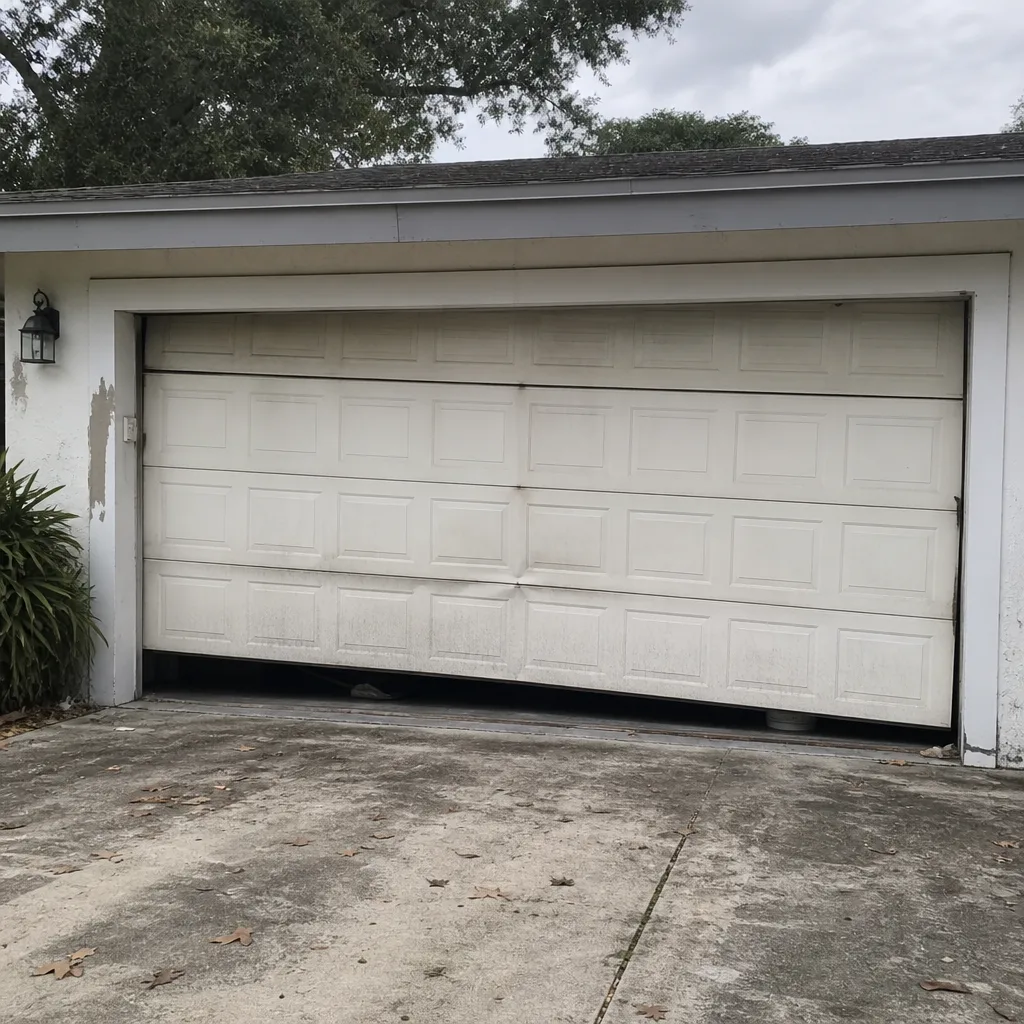 Before
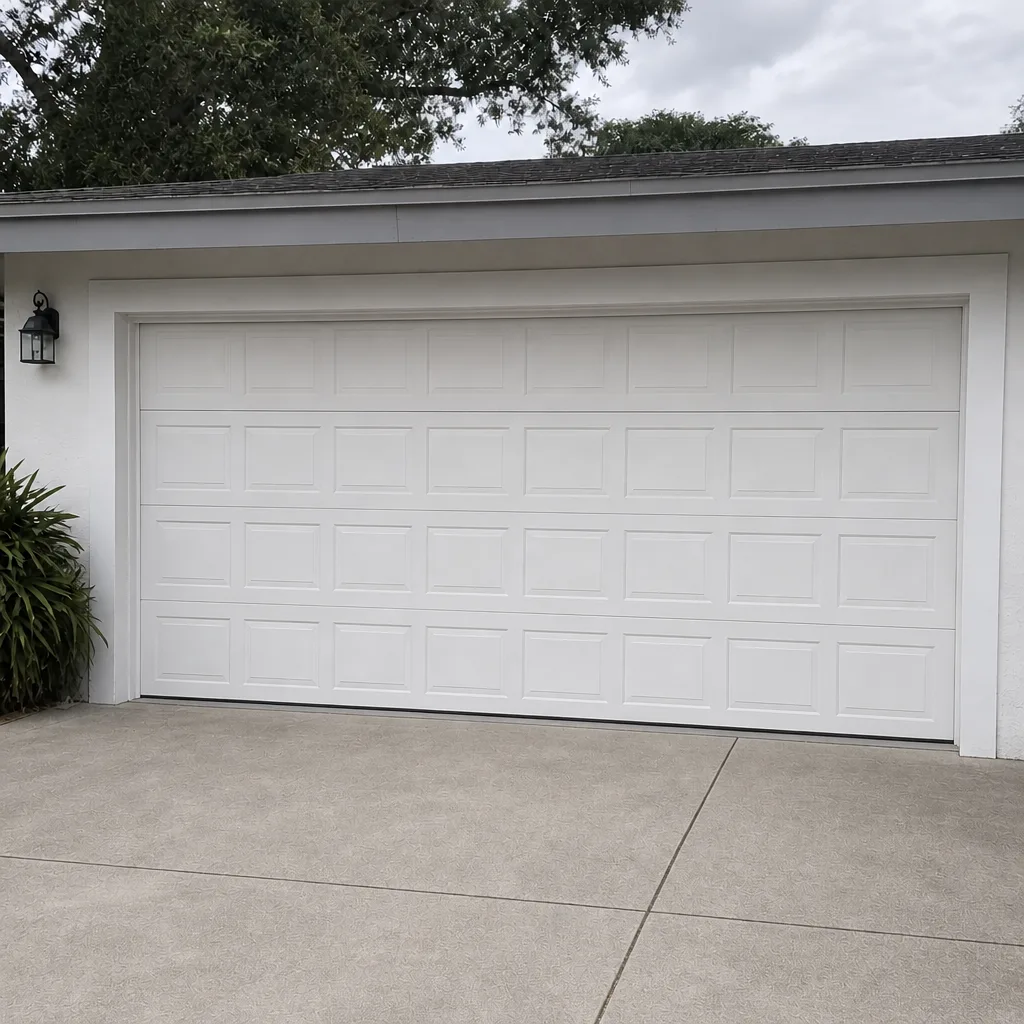 After
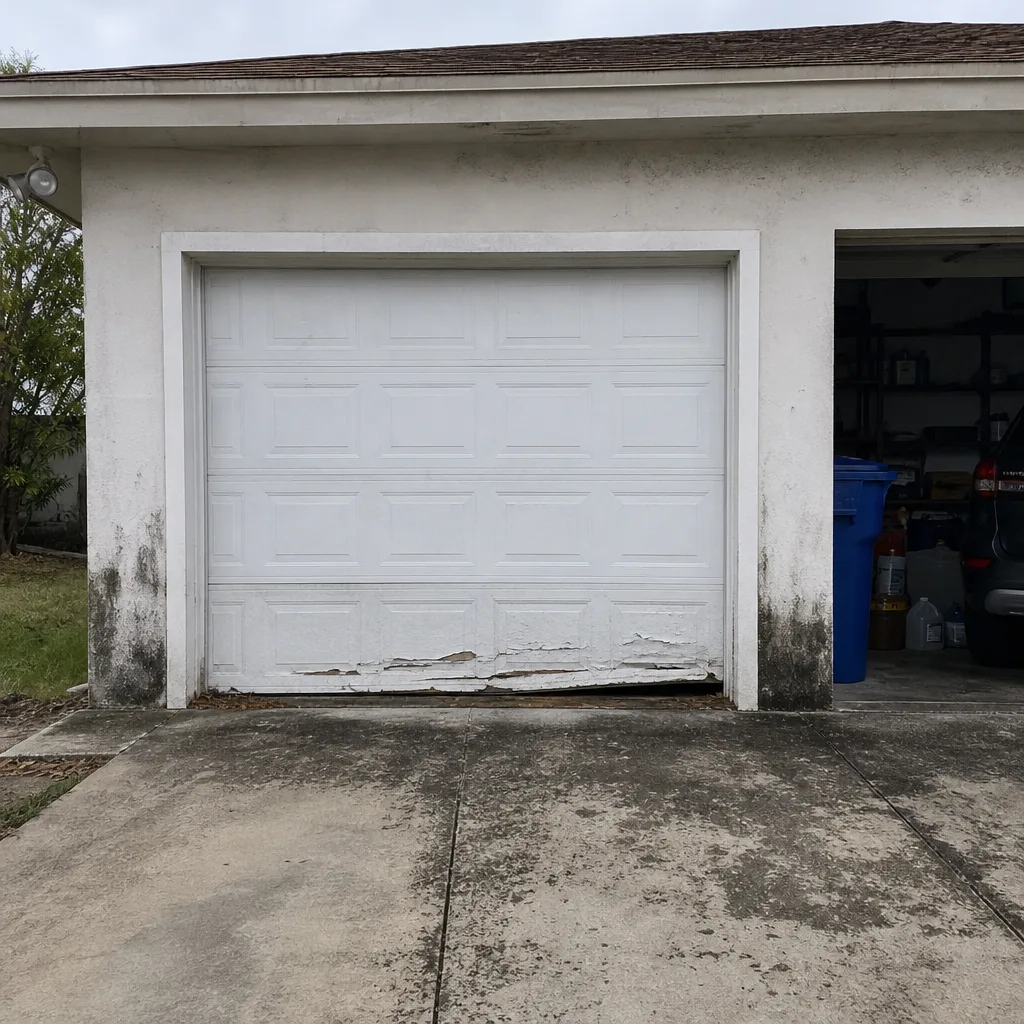 Before
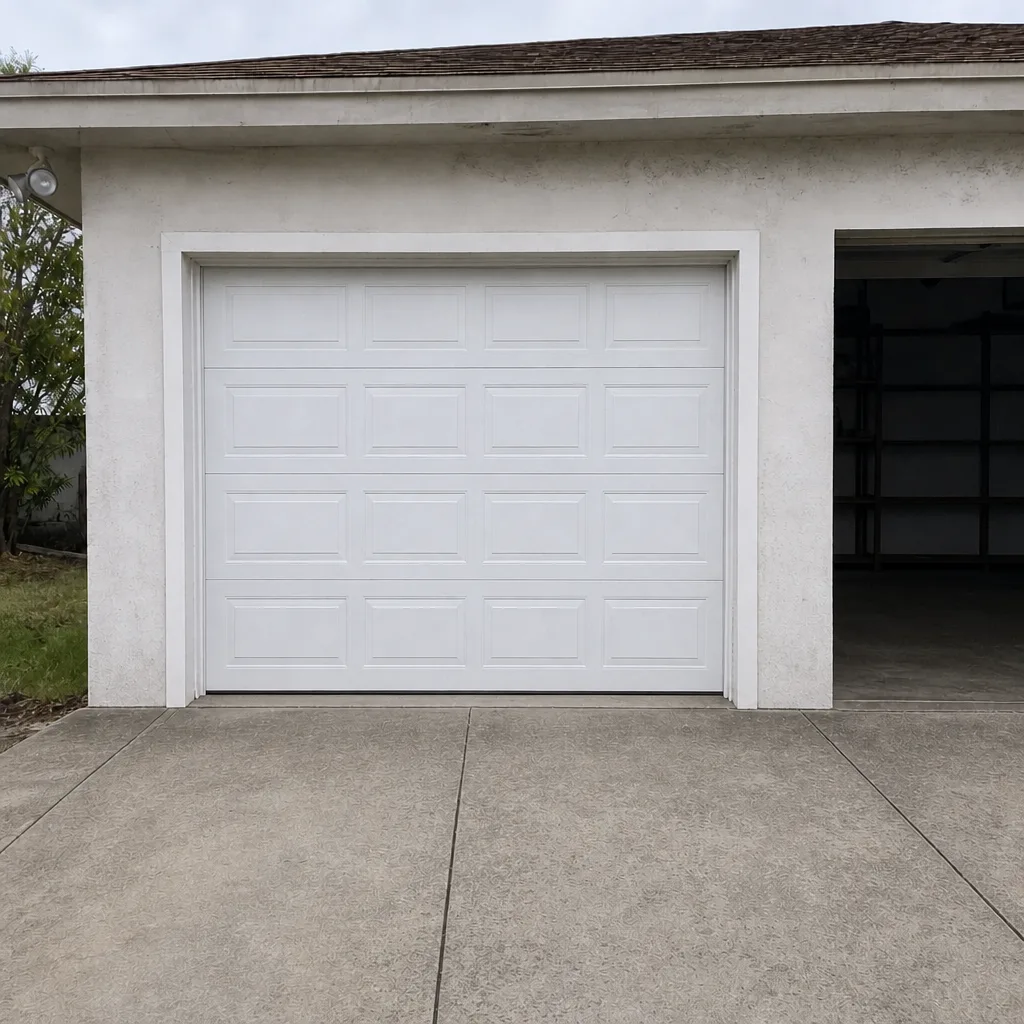 After
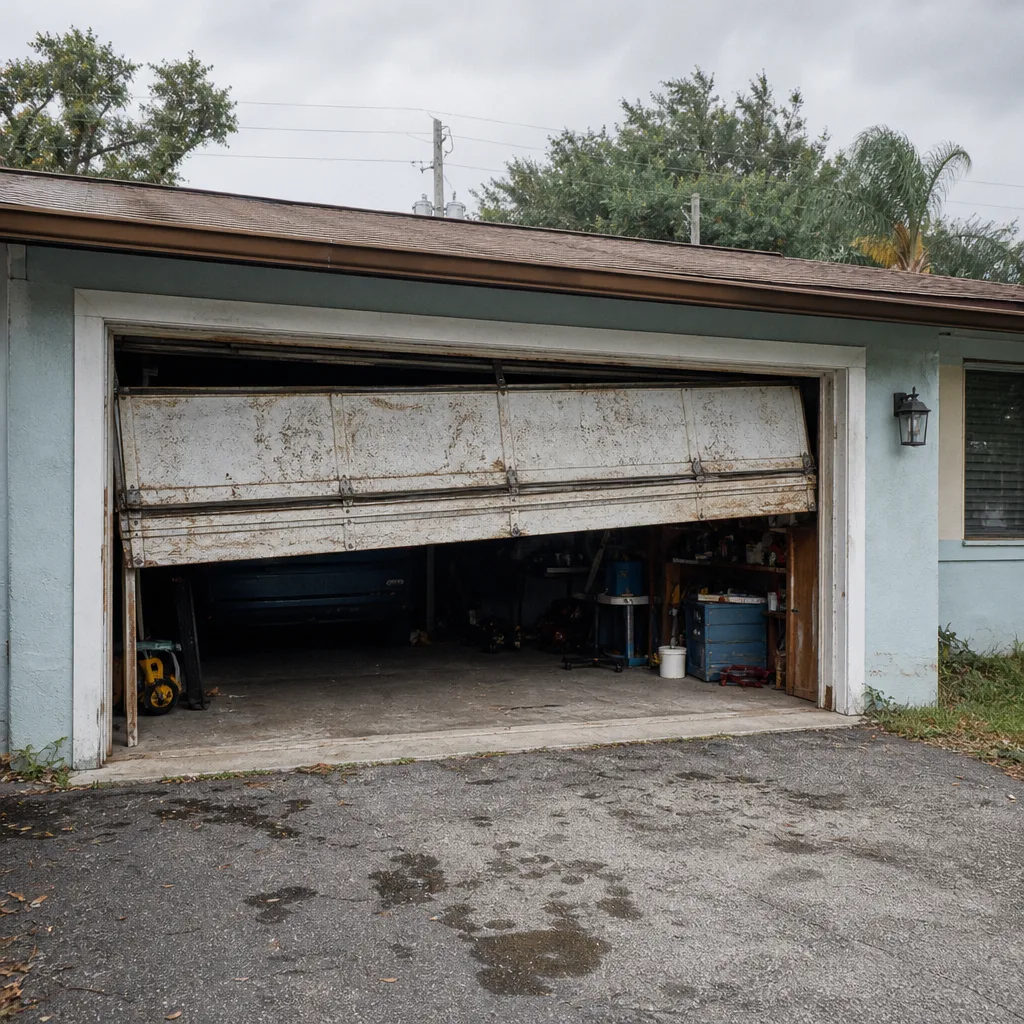 Before
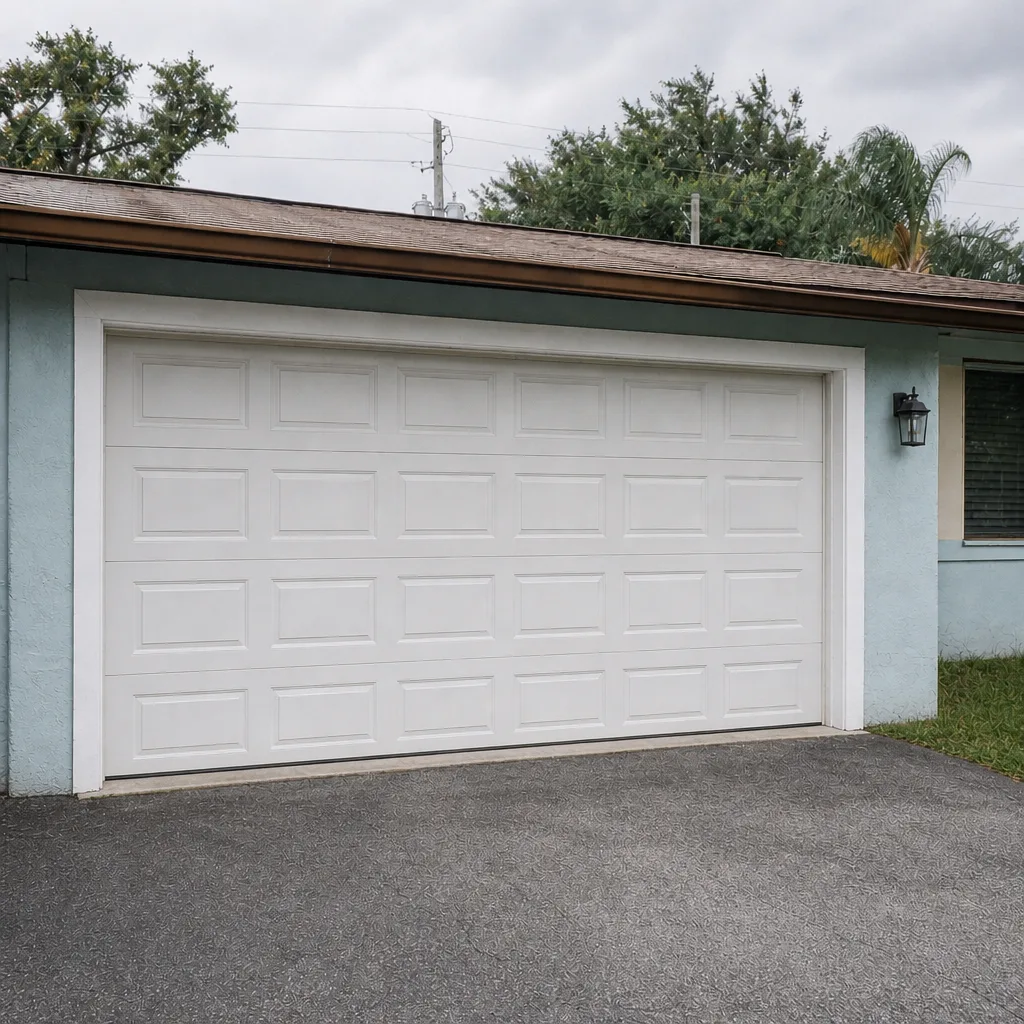 After
When to Call a Professional
Call a professional any time a spring or cable is involved, the door hangs unevenly, or the opener runs without moving the door. Those are the signs where continuing to use the door risks injury. For grinding, hesitation, a dragging seal, or an opener that works intermittently, you can schedule the service rather than treat it as an emergency, though we don’t recommend waiting long. North Miami Garage Door Repair Pros offers free estimates in North Miami. Call (888) 399-4139 and tell us what you’ve noticed. Our technicians service both the door and the operator across the eight major brands, so you get one clear diagnosis and a written price, agreed before any work starts. If you’re not sure whether your issue is urgent, call anyway. The phone call is free, and describing a symptom often tells us exactly what’s wrong.
Frequently Asked Questions
A broken spring or a door hanging off its track is the most serious, and you should stop using the door immediately. A spring under tension can fail dangerously, and a door off its track can come down. Call a professional rather than testing the door by running the opener. Call (888) 399-4139 for a free estimate.
A hesitation is most often a misaligned or dirty photo-eye or a logic board fault, not a dead motor. In North Miami, humidity can leave a film on the sensor lenses that causes exactly this. Clean the lenses first and check the sensor lights, then call if the pause continues. Estimates are free.
A grinding door is usually safe to use until you can get it serviced, as long as it closes fully and reverses correctly. Grinding most often means worn rollers or a misaligned track, and it gets worse with every cycle. Schedule it soon, and stop using the door if the grinding turns into a bang or the door starts moving unevenly.
Yes. Disconnect the opener with the manual release, then lift the door by hand and let go. If it feels heavy or drops, the door mechanism or spring is the problem. If the door moves easily by hand but the opener struggles, the operator is the issue. Call (888) 399-4139 and tell us what you found.
South Florida humidity and grit make the rubber bottom seal swell and grab the floor, which makes the opener strain on the last few inches of travel. It usually means the seal needs cleaning or replacement, not a new opener. It’s one of the most common North Miami warning signs and one of the cheapest to fix.
A door is a replacement candidate when multiple panels are rusted through, it needs repeated repairs on different components in the same season, or rust and pitting along the tracks won’t stop. A single fixable component, such as a spring, hinge, or one damaged panel, is a repair, not a replacement. Call (888) 399-4139 for an honest assessment.
The Bottom Line
The value of a warning sign isn’t in the symptom, it’s in what the symptom means and how urgently it needs attention. A two-second hesitation is a diagnostic clue, and usually a fixable one. A snapped spring is a stop. Knowing which is which tells you whether to schedule a repair, keep an eye on it, or stop using the door today. In North Miami, the humidity and heat press on doors in ways generic guides ignore, so rust, weatherstripping, and a dragging seal deserve a spot on your checks. Repair first, replace only when necessary. That approach, paired with a trained eye on the door and the opener together, keeps your garage working correctly and safely.
If you spot any sign that has you unsure, call North Miami Garage Door Repair Pros at (888) 399-4139 for a free estimate. We’ll tell you plainly what’s failing, whether it’s safe to keep using, and whether a repair will do. Estimates are free, and the price you’re quoted is agreed before any work starts.
Written by the team at North Miami Garage Door Repair Pros.